How Do Retaining Walls Prevent Soil Erosion on Sloped Properties in Western North Carolina?
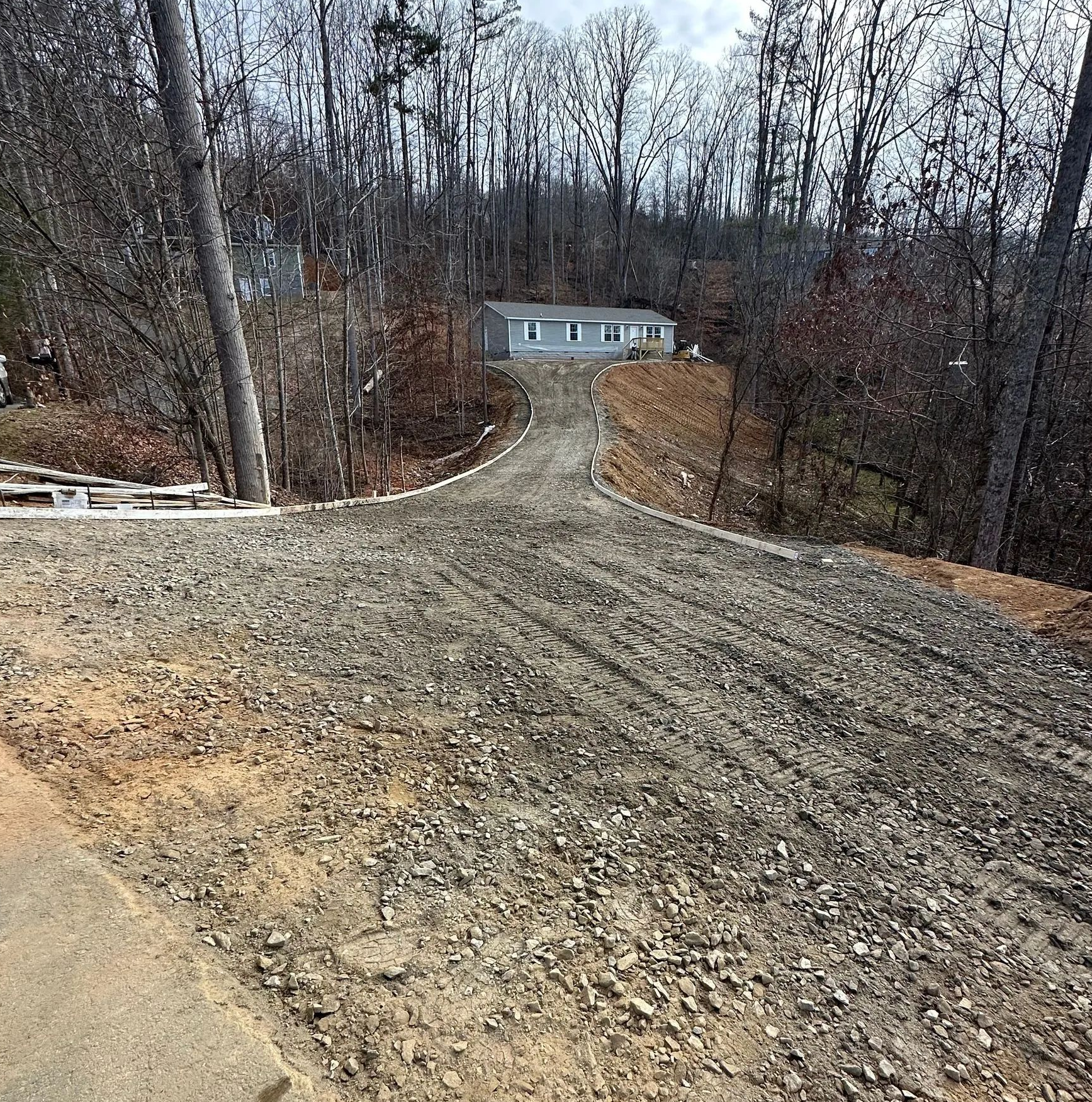
You walk out after a hard mountain rain and there it is. A fan of red mud across the driveway, a fresh gully cut into the slope, and a few inches of ground that used to be there simply gone. The mulch you spread in spring now sits at the bottom of the hill. Every storm takes a little more, and the bare clay keeps creeping toward your foundation.
Here is what you need to know first. A retaining wall stops that loss by holding the soil in place and breaking one long, steep slope into shorter level sections that water cannot race down. It does the work grass and gravity cannot manage on a grade this steep. Built right, with real drainage behind it, a wall turns a bank that sheds soil every season into ground that stays put. After rebuilding plenty of washed out slopes across these mountains, we can tell you the gap between a wall that lasts thirty years and one that bulges in two comes down to what you never see behind the face.
What is actually pulling your slope apart
Water moving downhill drives almost every eroding slope. On a grade, rain does not soak in evenly. It sheets across the surface, picks up loose particles, and carves small channels that grow into gullies with each storm. The steeper and longer the bank, the faster water moves and the more soil it lifts.
Our clay does not help. Tight mountain clay sheds water instead of soaking it up, so most of a downpour runs straight off the top. Add gravity pulling on wet soil, and a slope steeper than about 3 to 1 starts shifting on its own. Freezing and thawing finishes it in winter. Water in the top few inches freezes, swells, loosens the soil, and that loosened layer slides when it thaws. By spring you see crumbling ground and exposed roots.
How a retaining wall prevents soil erosion
A retaining wall prevents soil erosion by doing two jobs at once. It holds the soil back behind a solid face, and it cuts one punishing slope into shorter, flatter terraces that no longer feed fast runoff. Shorten the distance water travels and you starve it of the speed it needs to carry soil off.
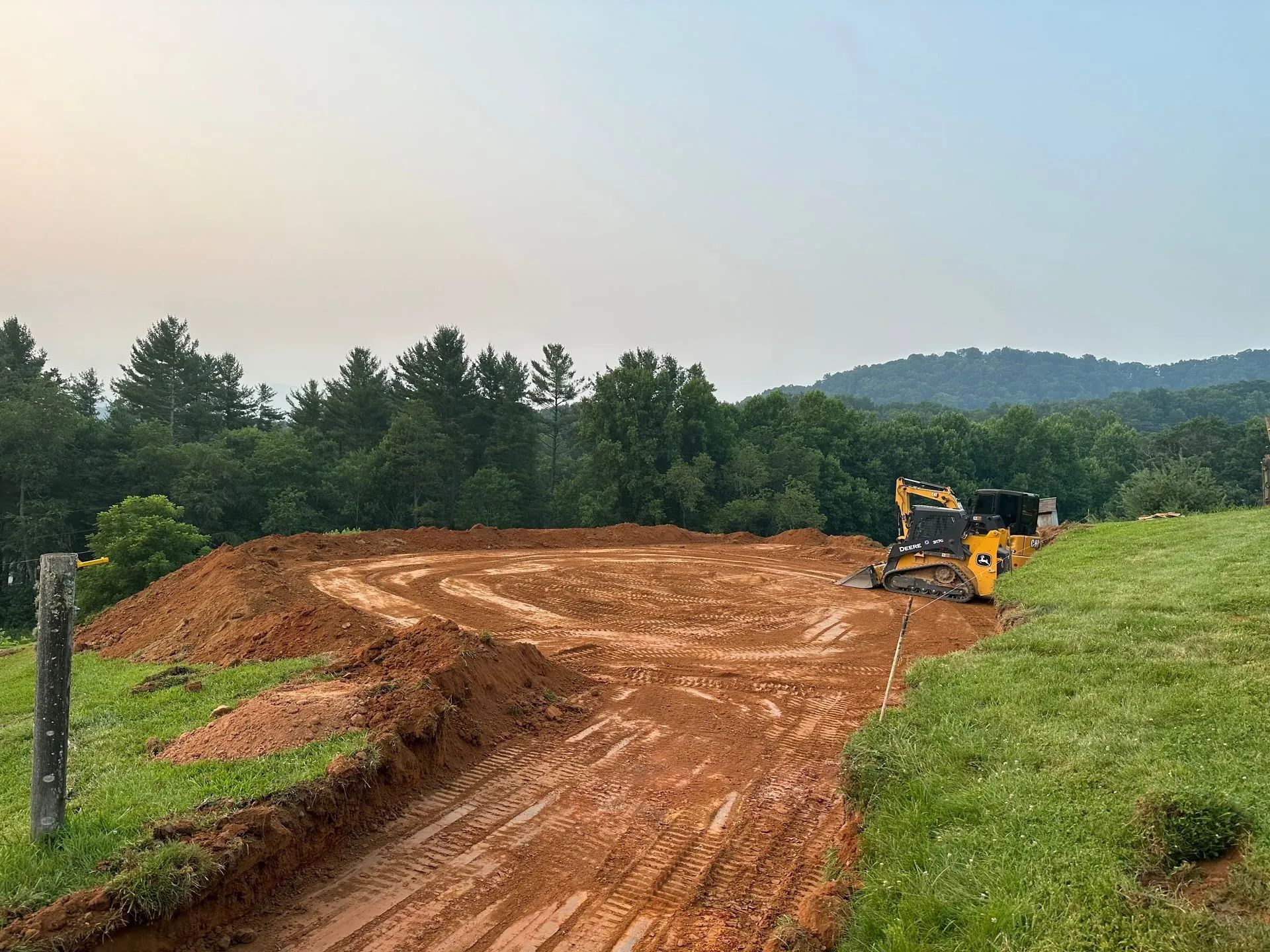
Picture a 12 foot bank rebuilt as two shorter walls with a level bench between them. Instead of one long ramp for water, you get flat ground where rain can pause and soak in. Each terrace catches what falls on it, and the benches give you ground you can plant and use. That is the part you see. The part that decides whether the wall survives sits behind it.
Drainage behind the wall makes or breaks it
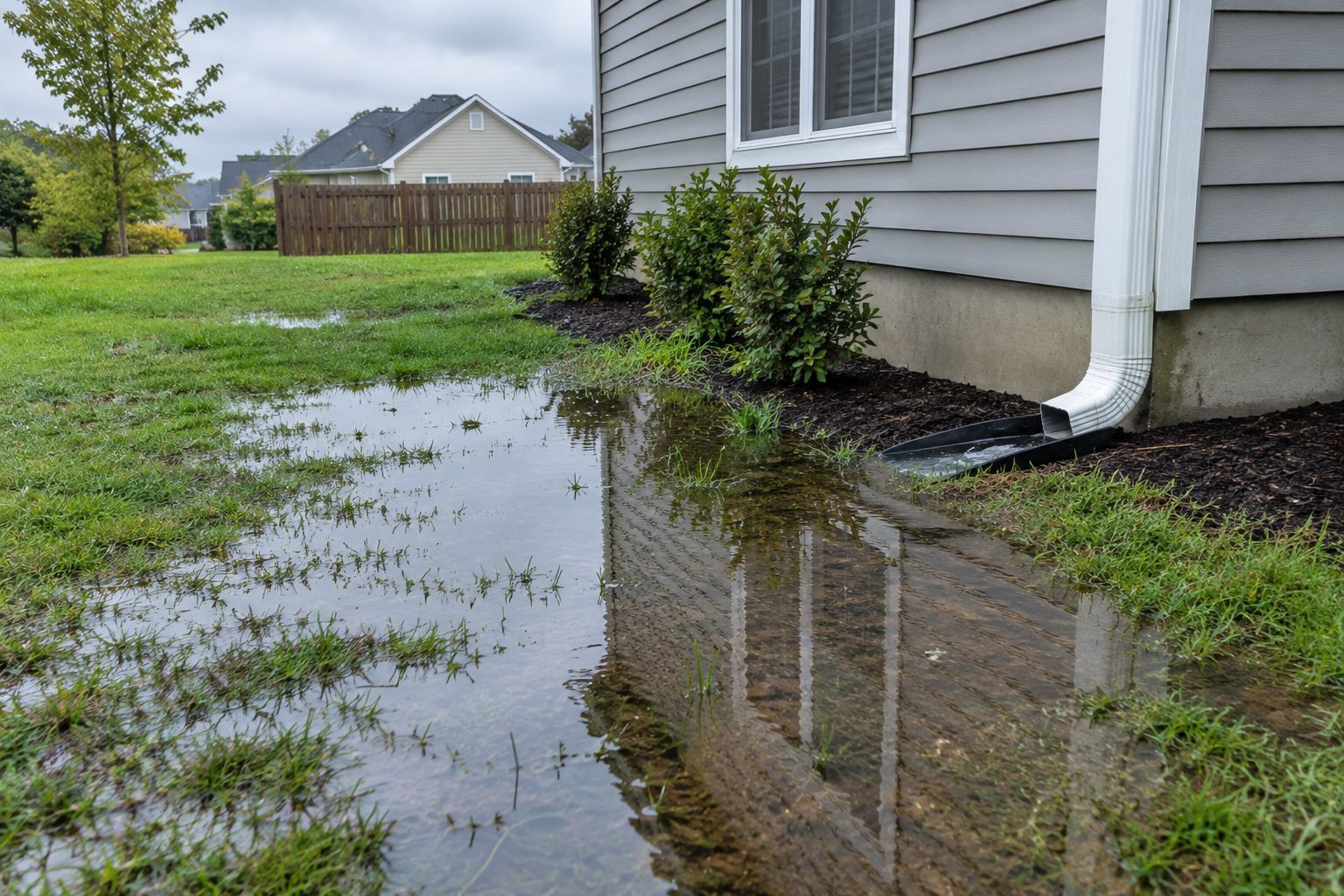
What sits behind the wall matters more than the blocks on the face. A retaining wall is really a dam, and water that collects behind it needs somewhere to go. When it cannot drain, that trapped water pushes hard against the back of the wall, and on saturated clay the pressure builds quickly. A wall that leans or bulges is almost always telling you the drainage failed, not the blocks.
On rebuilds we keep finding the same shortcut: native clay packed straight against the wall, no gravel, no pipe. A wall that lasts uses a column of clean crushed stone behind the face, a perforated pipe at the base that drains out to the side, and filter fabric that keeps fine clay from clogging the stone. We backfill the first 12 to 18 inches with gravel, never clay.
WARNING:
If a wall is leaning, bulging, or cracking wider in one spot, or if the slope above your house slumps after heavy rain, treat it as urgent. A failing wall or a moving slope can give way fast, and on a steep lot that means soil and stone heading toward whatever sits below. Keep people off it and get it checked before the next storm.
Why slopes in Western North Carolina move differently
Slopes here erode faster and fail harder than the national average, and the reasons stack up. The terrain is steep, far steeper than the rolling country an hour east. The soil is acidic mountain clay, thin over rock on the ridges and deeper in the coves, and it sheds water rather than drinking it in. And the rain comes in bursts. Summer storms drop a lot of water in a short window, the exact pattern that drives runoff and cuts gullies.
We have all watched what extreme rain does to these hillsides. Once the ground gets fully saturated, whole sections of slope can let go, and a wall that was never drained or reinforced for that load is the first thing to move. A wall on a mountain lot has to be planned around the worst storms, not the typical ones.
TIP: Next time it pours, put on a raincoat and watch where water actually runs on your slope. The path it carves and where it pools shows you exactly where a wall and its drain belong. Ten minutes in the rain saves a lot of guessing.
When a wall is the right fix, and when it is not
Keeping a wall working
A good wall is nearly maintenance free, but a few habits keep it that way for decades. Walk the base after big storms and look for soil or stone washing out, which means the drainage is backing up. Keep the weep holes and pipe outlet clear so water has an exit. Twice a year, in late fall before winter and again in spring before the heavy rains, look closely at the face. Catch a small bulge or a clogged drain early and it stays a small job.
Frequently Asked Questions
How long does it take to build a retaining wall on a sloped yard?
Most residential walls go in within a few days to about a week, depending on height, length, and access. Steep lots and walls needing engineered reinforcement take longer. Wet ground after storms can also push the schedule back.
Is it safe to keep using a slope while the wall is leaning?
No. A leaning or bulging wall can fail without much warning, especially after heavy rain. Stay off the slope above and below it, keep children and pets clear, and have it inspected before another storm loads the soil further.
Do retaining walls hold up to Western North Carolina storms?
A properly drained and reinforced wall holds up well here, but only if it was built for our steep grades and heavy bursts of rain. Walls designed for average weather are the ones that move once the ground fully saturates.
What is the best material for a retaining wall here?
Segmental concrete block works well for most yards because it drains, flexes slightly with the ground, and stacks into curves. Poured concrete suits taller or heavily loaded walls. The right pick depends on height, soil, and water.
Can plants alone stop erosion on a steep slope?
On a mild grade, deep rooted ground cover and shrubs can hold soil well. On a steep bank moving after storms, roots alone rarely keep up. A wall gives the structure, and planting the terraces adds a second layer.
Reliable Wall Builders Protecting Your Slope Every Season
A
retaining wall
only prevents soil erosion when the drainage behind it is built as carefully as the wall you see. On the steep clay slopes around these mountains, where rain arrives in heavy bursts and saturated ground gives way fast, that hidden detail separates a wall that holds for decades from one that fails in a season. If your slope is losing ground or an old wall has started to move, we can assess it and build one made for this terrain. Arguetas Grading and Concrete LLC
builds and repairs retaining walls across Asheville, North Carolina for over 15
years. Reach out before the next storm puts more pressure on a slope that is already slipping.