Why Proper Excavation Depth Matters Before Any Construction Project?
You marked out the site. The equipment is ready. Everything looks straightforward until the slab starts cracking six months later and nobody can explain why. In most cases, the answer was decided long before the concrete was poured. It was decided when someone chose how deep to dig. Getting excavation depth right is not a minor detail you sort out on the fly. It is the single most controllable variable in whether a concrete structure holds up for 30 years or starts failing in 36 months.
Depth errors are not always visible at first. That is what makes them expensive. A slab poured over inadequately excavated soil might look perfect on day one. But the soil beneath it will settle, shift, or heave with the seasons, and the concrete above it will follow. By the time you see the crack, you are already looking at a repair bill that could have been completely avoided.
The Ground Beneath You Is Not Uniform
Most people think of soil as a stable base. It is not. Soil is a living system that compresses, expands, and moves depending on moisture content, temperature, and load. Excavation depth is about removing enough of the unstable upper layer to reach material that can actually support weight without moving.
The top 6 to 12 inches of soil in most residential and commercial sites contains organic material, root systems, and loosely packed fill that compresses under load. If you pour concrete on top of that layer, you are essentially building on a sponge. The structure sinks unevenly, and uneven settling is what breaks concrete slabs, causes foundation walls to shift, and creates drainage problems that compound over time.
Proper excavation removes that weak layer and sometimes more, depending on what lies beneath. In Western North Carolina, the soil profile adds another layer of complexity. Asheville sits in a region where clay-heavy subsoil is common, and clay does something particularly damaging: it swells when wet and shrinks when dry. A concrete structure poured over unaddressed clay subsoil is going to experience lateral pressure every wet season and contraction every dry stretch. That cycle, repeated over years, is brutal on concrete.
How Deep Is Actually Deep Enough
The answer depends on three things: what you are building, what the soil profile looks like, and what the frost conditions are in your area.
Frost depth is the most commonly overlooked factor in residential projects. In the Asheville area, the frost line sits at roughly 12 inches. Any footing placed above that depth is vulnerable to frost heave, where freezing temperatures cause moisture in the soil to expand and physically lift the concrete above it. Repeated heaving and settling destroys footings, cracks slabs, and works connections loose over time. Footings for any permanent structure need to go below the frost line, period.
Soil bearing capacity determines how much weight the ground can support per square foot. Compacted gravel might handle 3,000 pounds per square foot. Loose, organic-rich topsoil might handle a few hundred. The depth you excavate partly determines which of those two situations you are working with. Remove the weak material, compact what remains, and add structural fill where needed, and you dramatically change the load-bearing math.
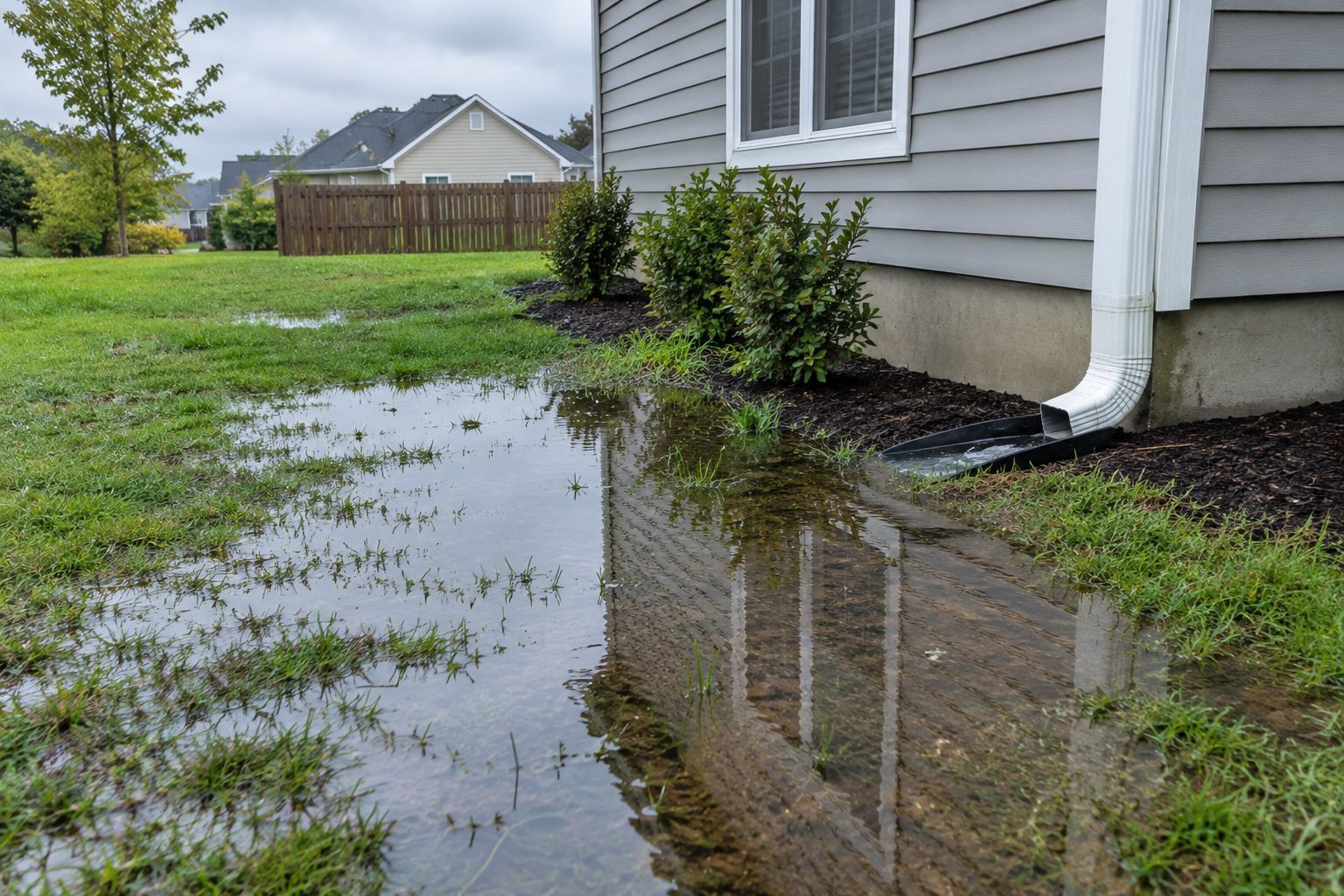
Drainage patterns matter as much as depth in many Asheville locations. The area's mountain topography means water moves aggressively during heavy rain events, and if your excavation creates a low point that collects water, that moisture will eventually work under your slab. Proper depth and grading work together. You cannot address one without thinking through the other.
What Happens When Excavation Depth Is Wrong
Shallow excavation is the most common mistake, and the damage it causes follows a predictable pattern. Within the first few years, you see minor cracking in the slab surface. That cracking allows water to enter. Water softens the already-weak subgrade material, which settles further. The cracks widen. Eventually sections of the slab drop lower than others, creating trip hazards, drainage problems, and structural failures.
Going too shallow under a driveway means you will start seeing spider cracks within two to three years of heavy vehicle traffic. Too shallow under a patio means the edges drop first as soil erodes outward. Too shallow under a garage slab means differential settling where the slab meets the foundation wall, which creates a gap that water enters every rain.
On the other end, excavating too deep without proper compaction or fill creates its own problems. Loose backfill settles over time just like weak native soil does. If you dig 18 inches and put uncompacted fill back in the bottom 8 inches, you have not solved the problem. You have moved it.
The depth matters. What you do with the excavated cavity matters equally.
The Pre-Pour Process That Most Projects Rush
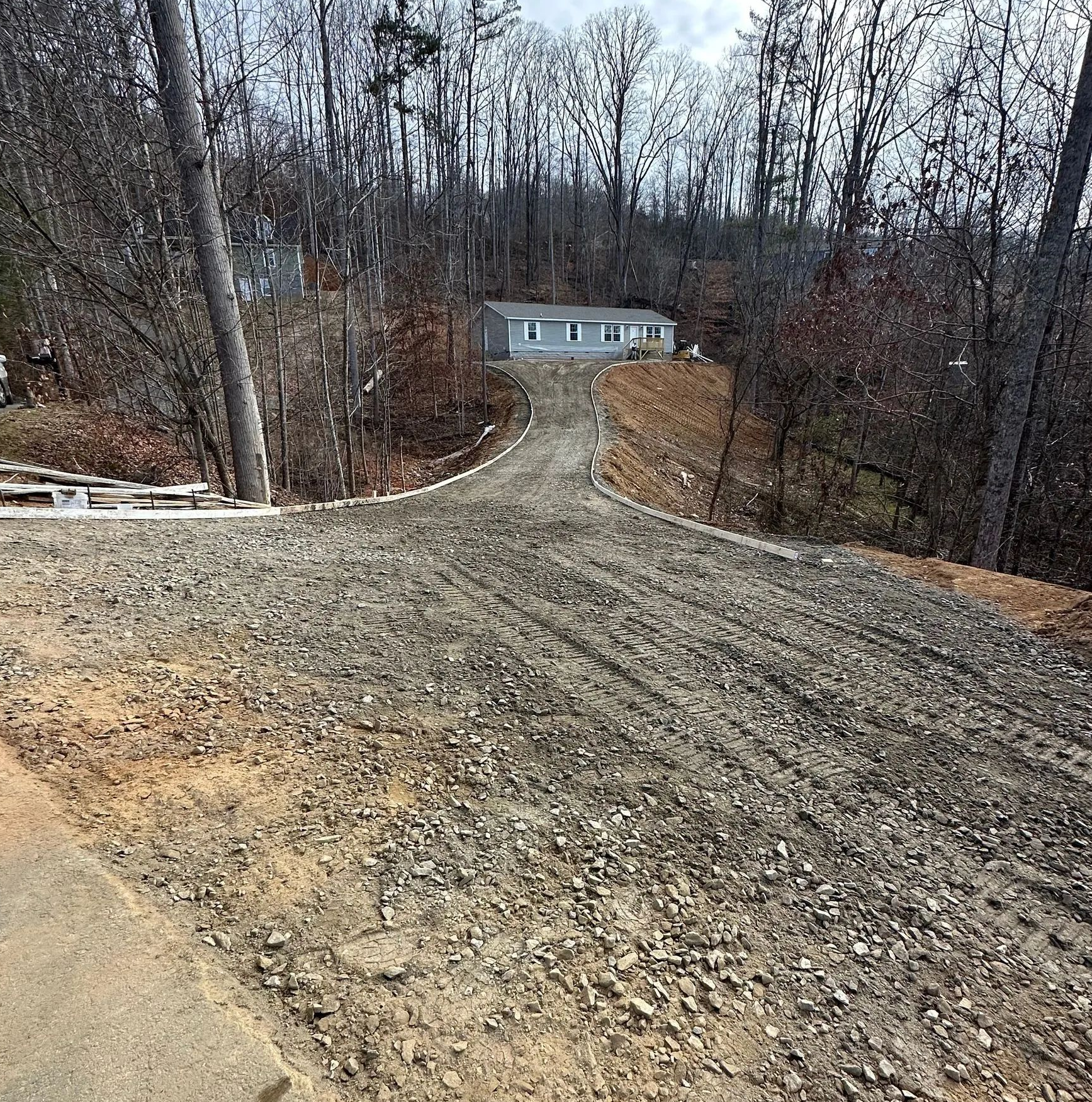
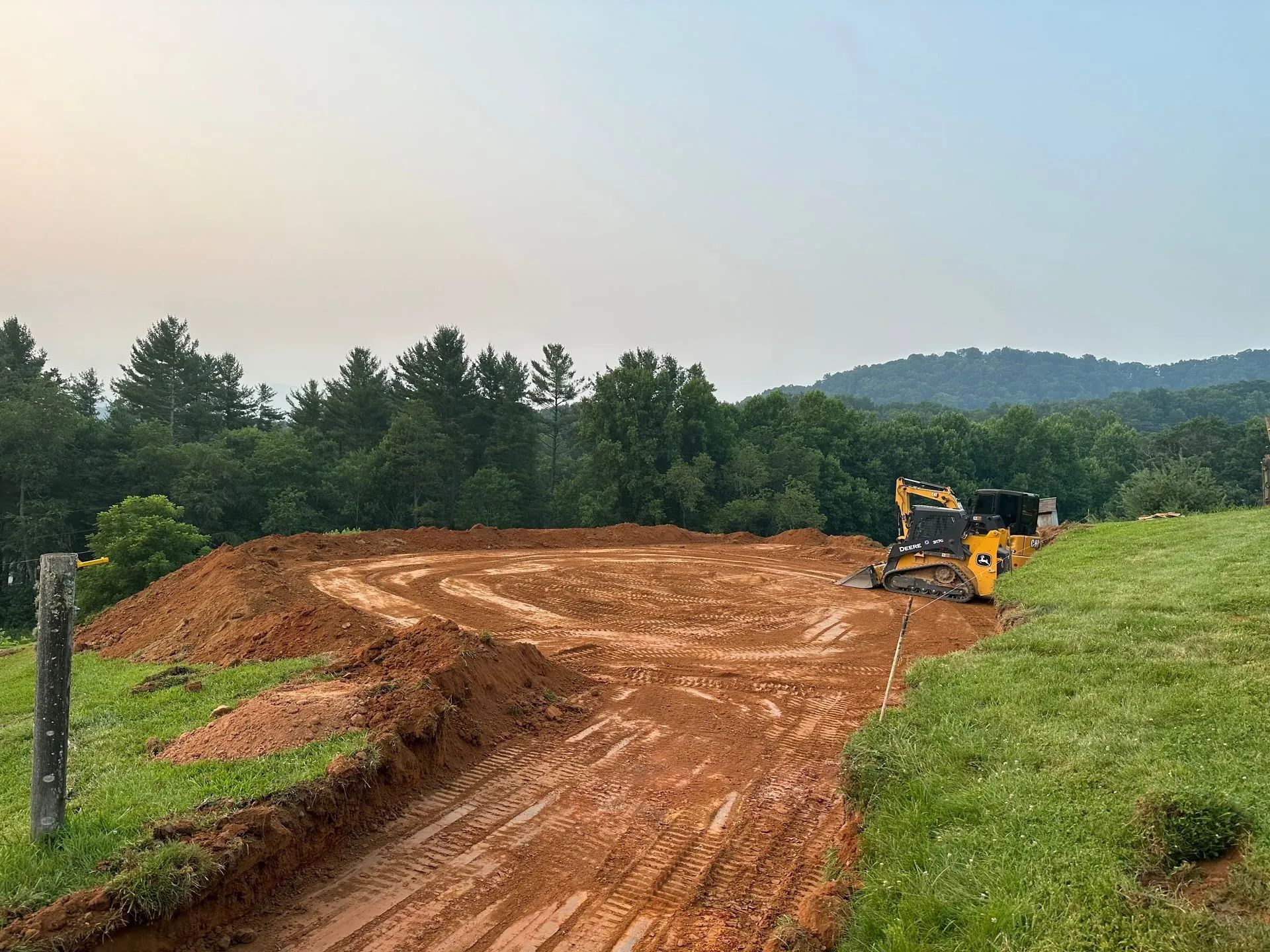
Professional excavation work for a concrete project follows a sequence that cannot be skipped without consequences. The first step is a visual and physical assessment of the native soil. You probe the ground, look at what the topsoil layer consists of, and make a call about how deep the unstable material goes. In Asheville's hillside neighborhoods, that depth can vary significantly even within a single lot.
After excavation to the correct depth, the subgrade gets compacted. On service calls, we frequently find projects where the excavation was done correctly but no compaction was performed. The base looks solid from above but has air pockets and loose zones beneath the surface. A plate compactor run over the subgrade in overlapping passes, sometimes with a light moisture treatment to help the soil bind, is not optional. It is the step that determines whether the depth you dug actually translates into a stable base.
Then comes base material. Crushed stone or gravel, typically 4 to 6 inches depending on the application, gets spread and compacted on top of the prepared subgrade. This layer serves two purposes: it adds compressive strength and it provides drainage. Water that gets under a slab needs somewhere to go. A gravel base gives it a path out rather than letting it sit and soften the subgrade.
Only after all of that is the form work set and concrete scheduled.
Local Factors That Change the Calculation
What You Can Assess Before Calling a Contractor
Before a contractor sets foot on your property, you can get useful information about your site by doing a few simple things.
Walk the area after a heavy rain and note where water pools. Any low spot that holds water for more than an hour is a drainage problem that excavation and grading need to solve, not just depth. Press a metal rod or stake into the ground in several spots across the project area. If it sinks easily past 6 inches, you have got soft material that needs to go. Check whether the project area is on a natural slope by running a string line across it. Even a subtle grade affects where water flows once the slab is in place.
None of this replaces a professional site assessment. But it tells you the right questions to ask and helps you understand what a contractor means when they talk about subgrade conditions and drainage planning.
Frequently Asked Questions
How do I know if a contractor dug deep enough before pouring my concrete?
Ask to see the excavated area before base material goes down. The exposed subgrade should be firm when you press on it and should show no visible organic material like roots or decomposed matter. Request that the contractor confirm the depth reached and compare it against the frost line for your area, which sits at approximately 12 inches in Asheville. Viewing the excavation before pour is a reasonable ask on any project.
Can you pour concrete directly over existing soil without excavating?
You can, but it will not hold under normal loading for long. Topsoil contains organic material that decomposes, compresses, and shifts with moisture. Concrete poured over unprepared native soil cracks and settles unevenly, often within two to three years. The only exception is when a site assessment confirms the native material is already dense and free of organics, which is uncommon in most residential settings across Western North Carolina.
Does excavation depth change for a driveway versus a patio or walkway?
Yes. A driveway carries vehicle loads, so the subbase requirements are more demanding. A standard residential driveway needs at least 4 inches of compacted gravel on top of properly prepared subgrade. A patio or walkway handling foot traffic only can sometimes use a shallower gravel base. But the excavation depth to remove unstable soil stays the same regardless. What changes is what goes back in, not how much comes out.
What is the risk of excavating too close to an existing foundation or structure?
Removing soil beside or beneath an existing footing can undermine the material currently supporting that structure and trigger movement or collapse. Any excavation within 5 feet of an existing structure needs careful assessment. Work that goes deeper than the existing footing elevation requires shoring or staged removal techniques. This is not something to estimate visually. Stop and get a professional evaluation before digging in that zone.
Why do excavation projects in Asheville sometimes take longer than expected?
Western North Carolina's terrain is variable below the surface. Rocky outcroppings are common throughout the area, and hitting ledge rock changes the entire excavation plan. Projects that look like straightforward grading work sometimes reveal high groundwater, unexpected soil transitions, or solid rock within a few feet of the surface. Addressing those conditions properly takes time. Rushing past them is what leads to failed slabs and expensive fixes later.
Getting Excavation Depth Right Protects Your Investment
Getting
excavation
depth right is the decision that determines everything that follows. In Asheville, where clay soils, mountain terrain, and nearly 47 inches of annual rainfall all work against concrete longevity, that decision carries more weight than it does in many other parts of the country. With 15
years of experience, Arguetas Grading and Concrete LLC
handles excavation, grading, and concrete installation across Asheville, North Carolina. If you have a project coming up and want a site assessment before anything gets scheduled, reach out to our team directly.