When to Repair vs. Replace Cracked Concrete Around Your Asheville Property
You step outside one morning, coffee in hand, and notice a crack running across your driveway that wasn't there last spring. Maybe it's a thin hairline line, or maybe it's wide enough to catch your shoe. You stand there wondering if you can patch it yourself, or if you're looking at a full pour. That decision matters more than most people realize.
The short answer: not every crack is a replacement problem, and not every patch holds. Concrete fails in specific ways, and once you understand what's driving the damage, the repair-or-replace question becomes a lot easier to answer. We've looked at cracked slabs across Asheville's neighborhoods for years, and the pattern of what fails and what holds is pretty consistent once you know what to look for.
What a Crack Is Actually Telling You
Concrete doesn't crack randomly. Every crack has a cause, and the cause tells you whether a repair will last or just delay the inevitable.
Shrinkage cracks are the most common kind, and they're usually the least serious. When concrete cures, it loses moisture and contracts slightly. If the mix had too much water or dried too fast, the surface pulls apart in thin, shallow lines. These typically appear within the first year or two and rarely go deeper than the top third of the slab. In the Asheville area, where summer humidity swings and occasional early frosts can affect curing conditions, shrinkage cracking is something we see on a lot of flatwork that was poured without proper curing covers or in poor weather windows.
Settlement cracks are a different story. These happen when the ground beneath the slab shifts or compresses unevenly. You'll see one side of the crack sitting higher than the other, which is the telltale sign. Western North Carolina's clay-heavy soils expand when wet and contract in dry spells, and that cycle pushes and pulls at the base of any slab sitting on it. Settlement cracks that show vertical displacement of more than a quarter inch are almost always pointing to a substrate problem that no surface patch can fix long-term.
Structural cracks run across load-bearing slabs, through control joints, or in patterns that suggest the slab is flexing under weight. These are wider, often 3 millimeters or more at the surface, and they tend to grow over time. If you're seeing cracks that appear to branch, form a map-like pattern across a large area, or follow each other in close parallel lines, you're likely looking at a slab that's been compromised through and through.
Freeze-thaw damage is something Asheville properties deal with every season. Water gets into existing cracks or the concrete's pore structure, freezes, expands by roughly 9 percent by volume, and forces the concrete apart from the inside. You'll notice spalling, which is when the surface flakes off in chunks, or wider cracks that seem to appear or grow every spring. This type of damage accelerates fast once it starts because each freeze cycle opens the crack a little more.
How to Read the Damage Before You Decide
The width of the crack is your first measurement. Use a credit card or a quarter. If the gap accepts either of those without effort, you're at or past 3 millimeters. That threshold matters because surface patching compounds are generally rated for gaps under 6 millimeters, but anything wider than 3 millimeters in a high-traffic area like a driveway or walkway is going to see that patch fail within two to three seasons unless the underlying cause is fixed first.
Check whether the crack moves. Press down on both sides of the crack with your foot. If one side rocks or gives, you have a void beneath the slab. Void formation under concrete is common on Asheville lots where the native soil was not adequately compacted at the time of the original pour, or where water has been washing out fines from the base layer over time.
Look at the pattern across the whole slab, not just one crack. A single hairline crack in a 10-year-old driveway is not the same situation as a 10-year-old driveway covered in interconnected cracks. In our experience, once cracking covers more than 25 to 30 percent of a slab's surface, the cost-per-year math almost always favors replacement over repeated patching cycles.
When Repair Makes Sense
Repairs hold well and deliver real value in specific situations. If the crack is under 3 millimeters wide, shallow, and not accompanied by displacement or rocking, a properly prepared and filled crack can last 5 to 10 years with no issue. The prep work is what most DIY repairs skip, and it's what causes them to fail.
For hairline and minor surface cracks, a concrete crack filler rated for exterior use works well when the crack is clean, dry, and routed or chased out first. Routing means cutting a small channel along the crack so the filler has depth to bond into. Without that step, a patch over a hairline crack tends to delaminate within one or two winters.
For spalled or surface-damaged areas, a resurfacer applied over properly cleaned concrete can add 8 to 15 years of life to a slab that's otherwise structurally sound. This is worth doing on patios and garage floors where the damage is cosmetic but the base is still stable. On driveways, resurfacing works best when the concrete underneath is flat, fully bonded, and not showing any sign of movement.
TIP: Before any patching or resurfacing, let the concrete dry for at least 48 hours after any rain. Moisture in the slab is the number one reason patch products fail early. In Asheville's wet springs, that waiting period often extends longer than homeowners expect.
When Replacement Is the Honest Answer
There are situations where no patch product will hold, and trying to avoid a replacement ends up costing more over a 5-year window than just doing the full pour up front.
Replace when you're seeing vertical displacement greater than half an inch anywhere in the slab. The substrate problem causing that shift will keep moving, and a repair on top of a moving base is a temporary fix at best.
Replace when the cracking is widespread and the slab is over 25 years old. Concrete has a service life, and older slabs often have rebar that's corroded, bases that have compacted unevenly over decades, or a mix design that's become too porous over time to hold repairs. In many of Asheville's older neighborhoods, original flatwork from the 1980s and 1990s is reaching that point now.
Replace when you're seeing deep freeze-thaw spalling across the majority of the surface. Once the freeze-thaw cycle has worked through the depth of a slab, patching the surface doesn't address the structural integrity that's been lost through the material itself.
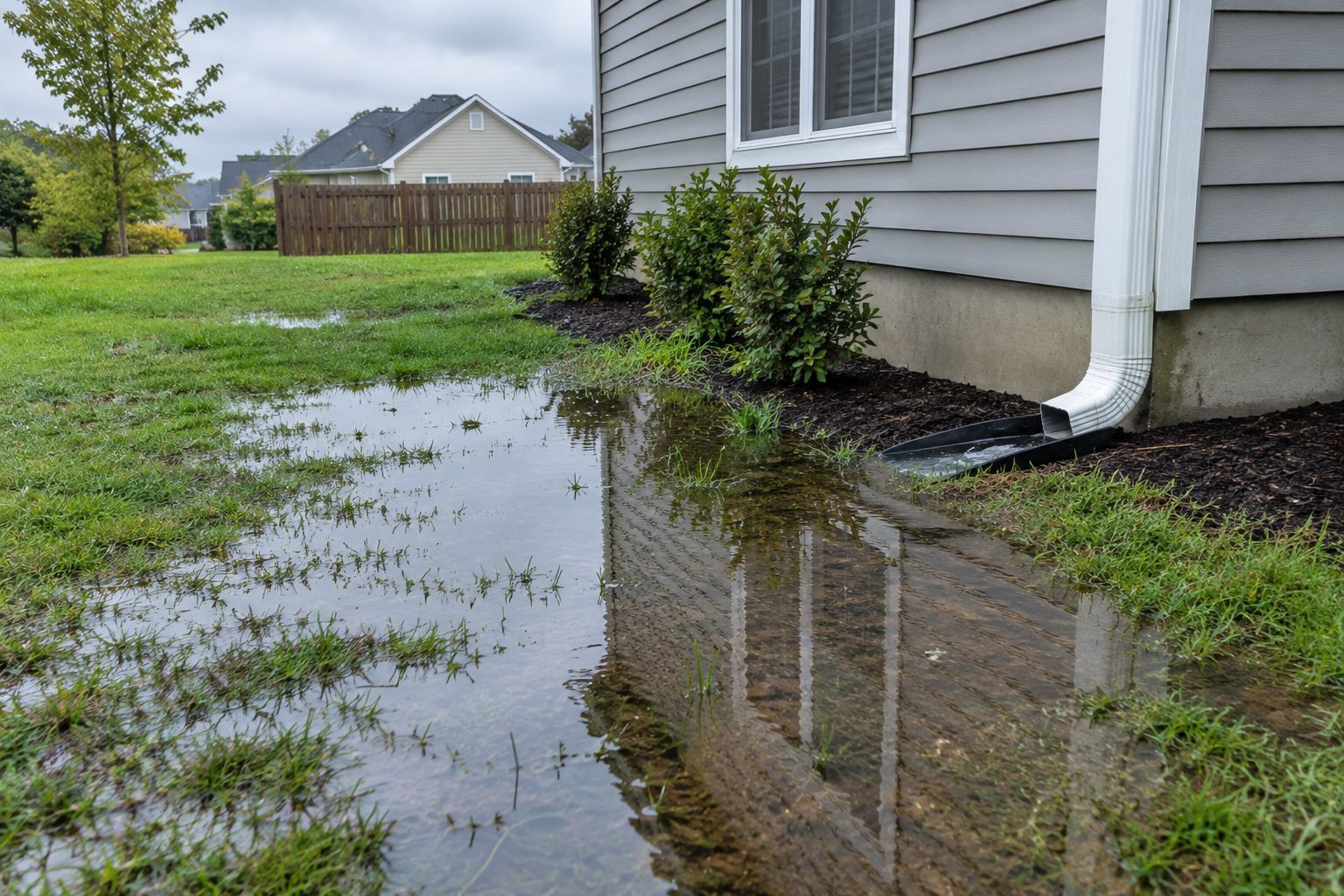
WARNING: If you notice that a section of your driveway, sidewalk, or patio has sunken significantly near a downspout, along a foundation wall, or at the edge of a garage slab, stop loading that area with vehicles or heavy foot traffic until it's been inspected. Sunken slabs can indicate void formation that makes the concrete unstable underfoot, and that's a fall risk that warrants professional assessment before any repair work starts.
Maintenance to Slow the Cycle
Frequently Asked Questions
Can I fill a crack in my driveway myself, and will it actually hold?
You can, and for the right crack, it will hold. Hairline cracks under 3 millimeters wide and without displacement are good candidates for DIY filling using a polyurethane or epoxy crack filler. Prep is everything: the crack needs to be clean, dry, and debris-free. DIY repairs fail most when the crack is still actively moving due to a substrate issue underneath.
What does it mean when one side of a crack is higher than the other?
That's displacement, and it means one slab section has settled or heaved relative to the other. In Asheville's clay-heavy ground, this is common after wet winters. Displacement under a quarter inch can sometimes be addressed with foam leveling before sealing. Anything over a quarter inch near a foundation or load-bearing slab warrants professional assessment before any repair is attempted.
How long does repaired concrete last compared to new concrete?
A well-executed repair on a structurally sound slab can last 5 to 10 years depending on crack type and whether the underlying cause was addressed. A new pour on a properly prepared base typically carries a 25 to 30-year service life. If a repair needs revisiting every 3 years versus a replacement lasting 25, the upfront difference often narrows significantly over a 10-year window.
Is it safe to drive on a cracked concrete driveway?
Hairline and minor surface cracks don't meaningfully affect structural capacity. But sections that rock underfoot, have dropped noticeably, or show cracks running the full slab width should have vehicle traffic limited until assessed. A void-backed slab under repeated vehicle loads can crack through completely, turning a repairable section into a full replacement scenario faster than most homeowners expect.
Does Asheville's climate make concrete crack faster than in other parts of North Carolina?
Yes. At 2,100 feet, Asheville gets more freeze-thaw cycles per winter than Charlotte, Raleigh, or Wilmington. More cycles means more internal stress, especially on slabs with existing cracks or a porous mix. Combined with Buncombe County's clay soil movement, the forces acting on flatwork here are more active than in most of the state.
Not Every Crack Needs a Full Concrete Replacement
Whether you're looking at a thin line that appeared after last winter or a slab that's been shifting for a few seasons, the repair-or-replace decision comes down to crack severity, substrate condition, and how many years of service life you need from the fix. In Asheville, where freeze-thaw cycles and clay soils put real pressure on flatwork every year, getting that assessment right the first time saves the expense of a repair that fails in year two.
At Arguetas Grading and Concrete LLC, we've been evaluating cracked concrete across Asheville, North Carolina for over 15
years. If you're trying to decide whether to
repair or replace concrete
on your property, we can assess the slab, explain what's driving the damage, and give you an honest recommendation on what will actually hold.