What to Know Before Installing a Septic System in Western North Carolina
You bought a piece of land in the mountains, or you're building a home outside the city water line, and now someone tells you the septic system is going to be more involved than you expected. That is a very common conversation in Western North Carolina. The terrain here does not behave like the flat, predictable ground you read about in a national installation guide, and if you go in without understanding the local variables, you can end up with a failed perc test, a site plan that does not work, or a system that costs far more than your original budget.
The single most important thing to know before you install a septic system in this region is that the slope, soil depth, and rock content of your specific lot will shape every decision that follows. This is not a one-size solution. What works on a half-acre lot in the valley might be completely unusable on a hillside in Madison County.
Why Western North Carolina Makes Septic Installation More Complicated
The geology of this region is the starting point for everything. Much of Western North Carolina sits on fractured bedrock that can be extremely close to the surface, sometimes within 18 to 24 inches. When bedrock is that shallow, you cannot install a conventional septic system. There simply is not enough soil depth to treat the effluent before it reaches groundwater. In those situations, the project moves to an engineered alternative system, which changes both the scope and the budget significantly.
On top of that, the mountain terrain creates slope problems that flat-ground installations never face. A lot that looks buildable from the road might have a usable footprint that is much smaller once you account for setbacks, the required distance from wells and streams, and the grades the soil absorption field needs to function. Slopes above 30 percent generally cannot support a conventional drain field at all. Slopes between 15 and 30 percent require a much more careful site layout, and often require a pump rather than a gravity-fed system.
The soil composition adds another layer. Clay-heavy soils common in some areas of the region drain too slowly and cause a percolation rate that fails the standard test. Sandy or loamy soils drain too quickly and do not give the effluent enough contact time to be treated. The sweet spot is a sandy loam or loamy soil with a percolation rate between 1 and 60 minutes per inch. Getting that result on a mountain lot requires an actual site evaluation, not an estimate.
The Perc Test and Soil Evaluation Process
Before any design work starts, the lot needs a soil evaluation. This is where a licensed soil scientist or authorized agent evaluates the soil profile to at least 48 inches deep, assesses the seasonal high water table, checks for restrictive horizons like clay layers or fragipan, and determines whether a conventional or alternative system is needed.
A perc test is a timed measurement of how fast water absorbs into the soil at a specific depth. Most counties in Western North Carolina use the soil morphology evaluation as the primary tool, with perc testing done as a supplement. The results dictate which type of system is approved for the lot.
TIP: Schedule your soil evaluation in late fall or early winter if you can. This is when the seasonal high water table is closest to the surface, giving the evaluator the most accurate reading of how the soil behaves under real conditions. A summer evaluation on a dry year can miss a water table that would cause a system to fail nine months later.
What we see on a lot of sites here is that property owners assume a perc test is just a formality. Then the evaluator finds a fragipan at 30 inches or a seasonal water table at 24 inches, and the whole plan has to be redesigned around an engineered alternative system. That redesign process takes time and adds to the project. Going in with realistic expectations about what the soil might reveal saves a lot of frustration.
Types of Septic Systems Used in Western North Carolina
A conventional gravity-fed system is the simplest and least expensive option when the site supports it. Effluent moves from the tank to a distribution box and then into a drain field by gravity alone. This works on lots with sufficient soil depth, acceptable percolation rates, and slopes gentle enough to allow passive flow. On many Western North Carolina properties, this system is not possible.
When the site does not support conventional installation, the project moves to one of several alternative system types. Low-pressure pipe systems distribute effluent through small-diameter pipes under slight pressure, which allows for a more controlled distribution pattern across uneven ground. Drip irrigation systems deliver effluent in small, timed doses to a subsurface network, and they work well on steeper slopes that would overwhelm a conventional field. Mound systems raise the absorption area above the natural ground surface when soil depth is insufficient, though steep lots often cannot support a mound due to the grading and fill required.
Each system type has different maintenance requirements and a different expected service life. A well-installed conventional system can last 25 to 40 years with regular pumping. Alternative systems that rely on pumps and timers have mechanical components that need more frequent inspection, usually annually, and those components will eventually need replacement.
Site Grading and Excavation on Mountain Lots
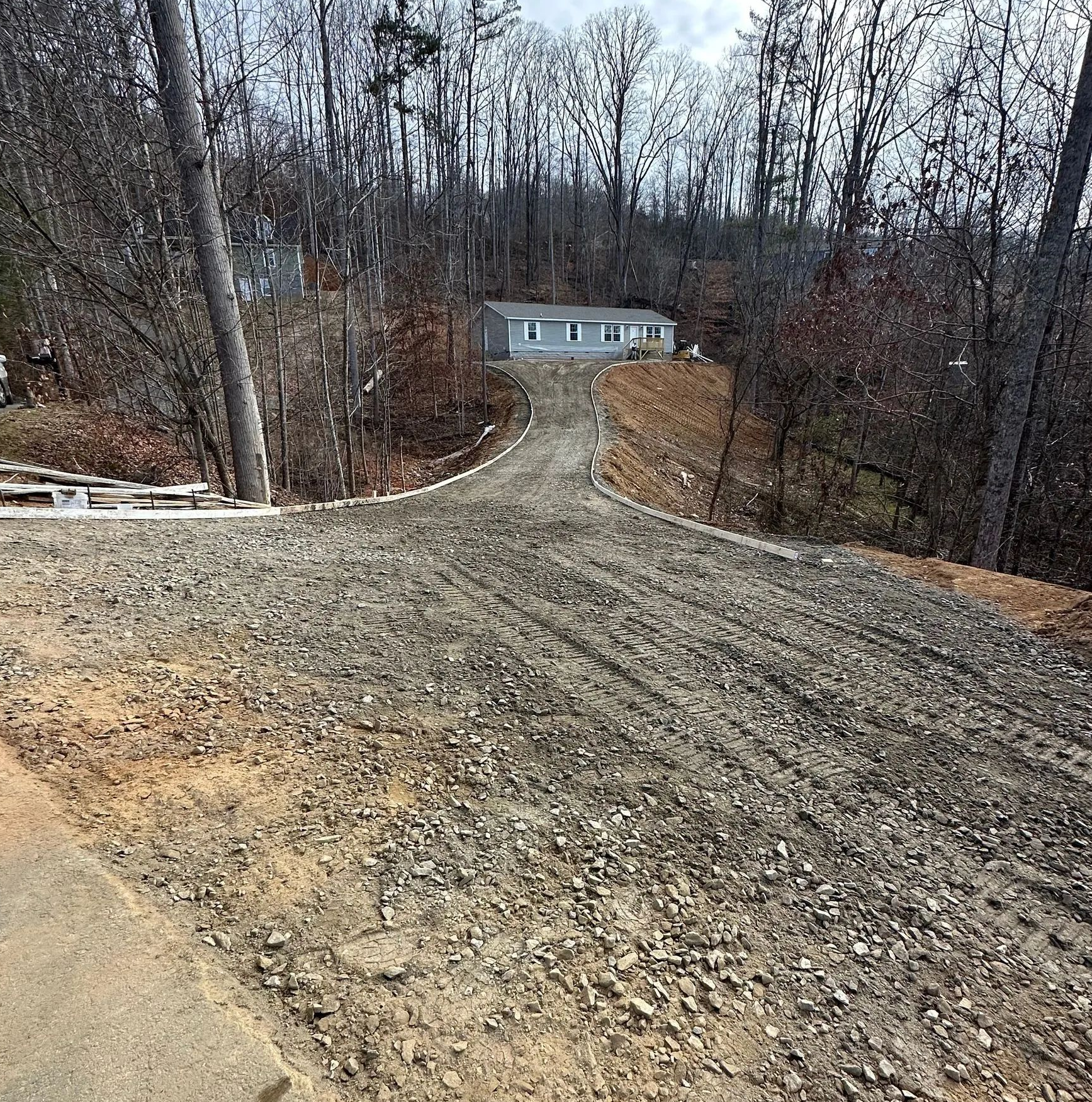
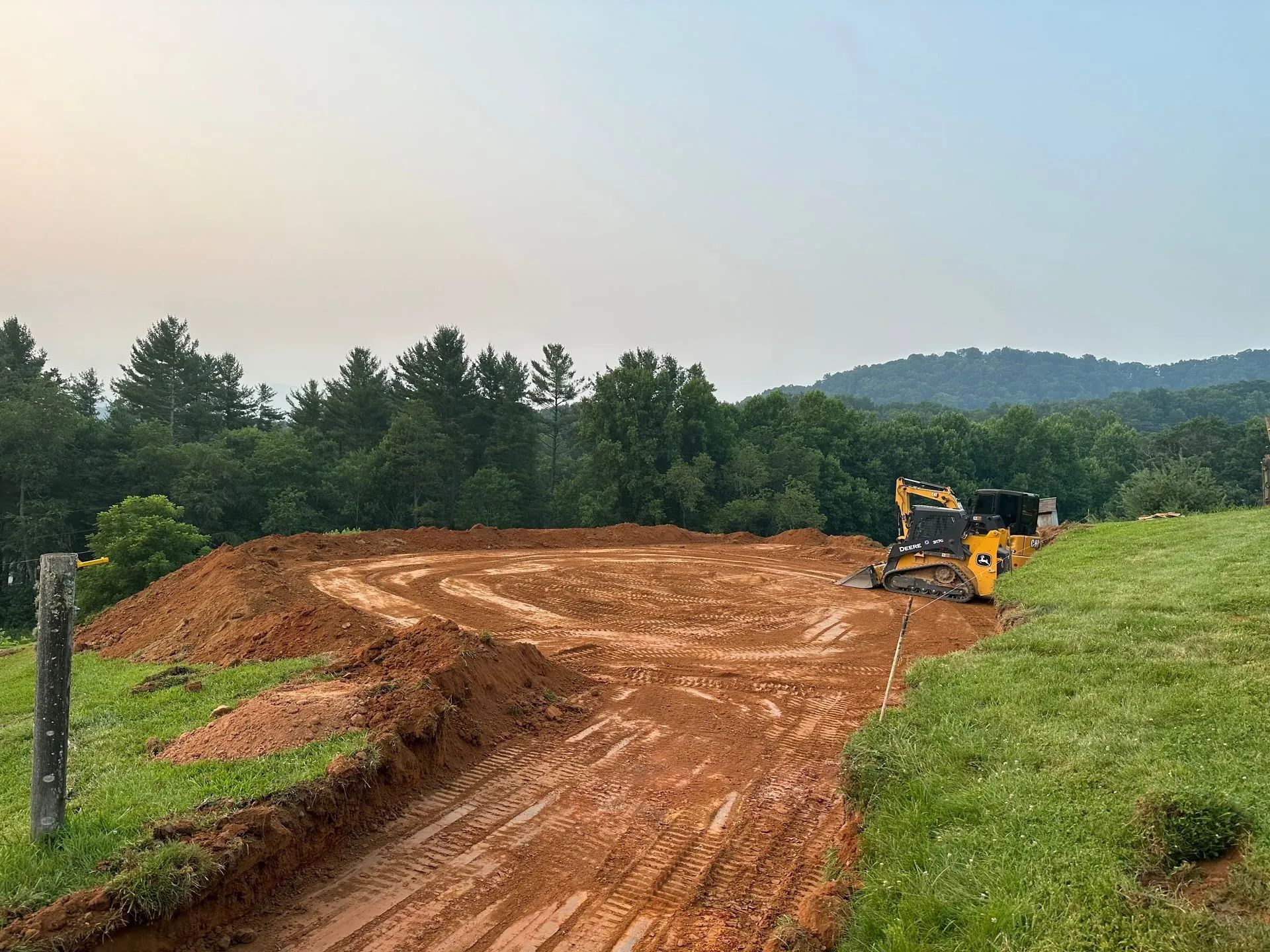
This is where the concrete and grading side of the project becomes just as important as the system design itself. Getting a septic system properly installed on a sloped Western North Carolina lot requires significant grading work before the system can go in. The septic contractor designs the system; the grading work prepares the ground to match that design.
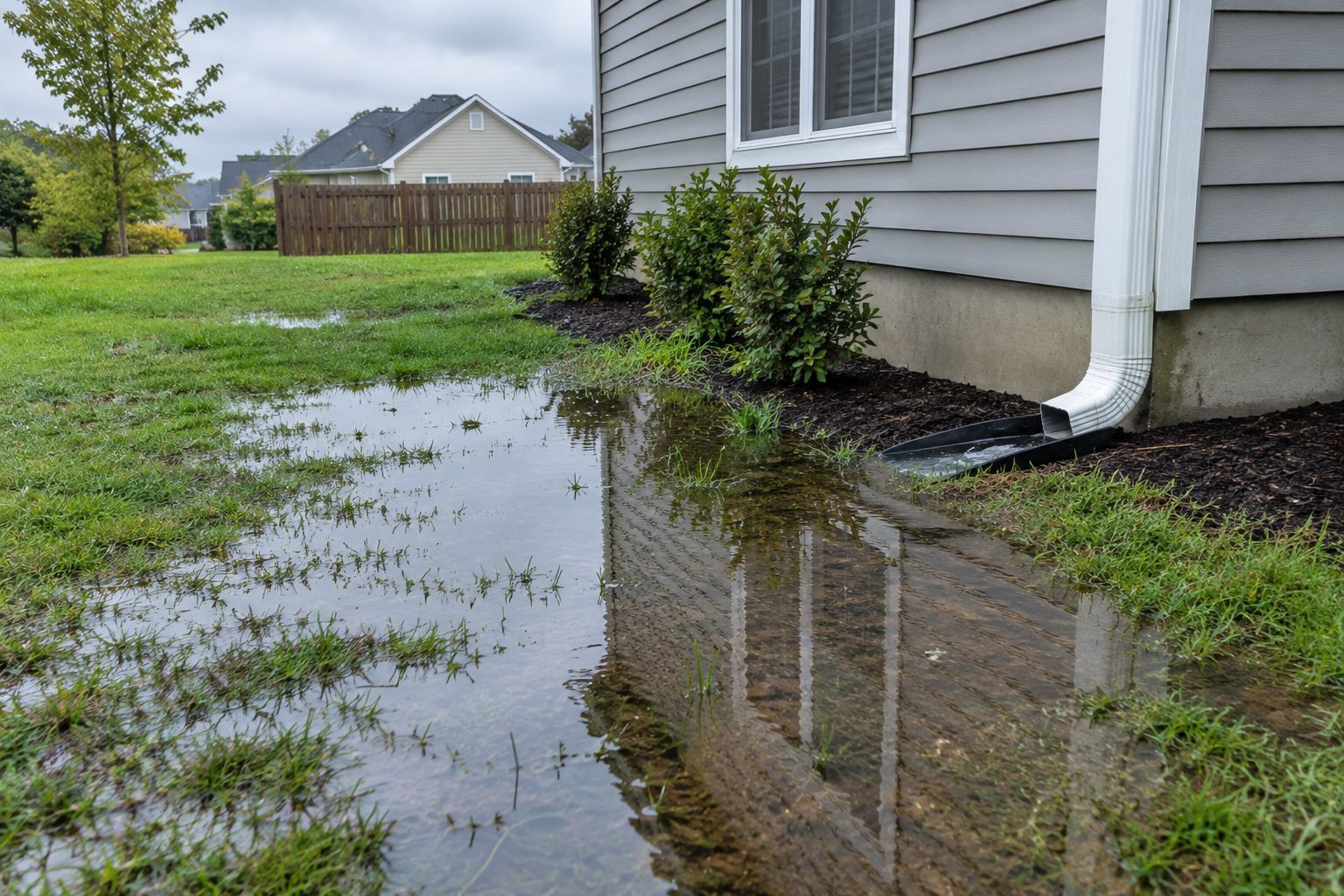
On steep lots, access alone can be a challenge. Heavy equipment needs a stable path to reach the installation area, and the soil around the tank and field must be graded to prevent surface water from running directly into the system. Drainage swales above the absorption field are not optional on hillside lots. When surface water enters the drain field, it saturates the soil and causes premature system failure, sometimes within a few years of installation.
We also see a lot of lots where the homeowner wants to site the house in one location and the only viable septic area is 150 to 200 feet away. Long tank-to-field runs require careful elevation management and often a pump. Planning the home placement and the septic layout at the same time avoids situations where one forces a bad compromise in the other.
WARNING: If your lot has a seasonal stream, a wet-weather spring, or evidence of seasonal saturation in any area, do not assume that area is outside the required setbacks without having it formally evaluated. Septic systems in Western North Carolina must maintain a 50-foot setback from streams and surface water features. Installing too close to a water source is a serious problem that can result in system removal and site remediation.
What the Installation Timeline Actually Looks Like
Frequently Asked Questions
How long does a septic system last in Western North Carolina?
A properly maintained conventional system lasts 25 to 40 years before the drain field needs replacement. Clay-heavy soils and high annual rainfall in this region put extra stress on drain fields. Systems on saturated or marginal soils tend to reach the lower end of that range.
Can I install a septic system myself in North Carolina?
No. Installation requires a licensed contractor and a permitted design. The soil evaluation, system design, and final inspection all require licensed professionals. An unpermitted system creates serious problems if the property is sold or if the system fails and affects a neighboring property or water source.
What happens if my lot fails the soil evaluation?
A failed conventional evaluation does not mean you cannot build. It means you need an engineered alternative system. The evaluator identifies limiting conditions and approved system types for your site. Some lots are genuinely undevelopable, but that determination comes after a full evaluation, not a visual guess.
How often does a septic system in this area need to be pumped?
A 1,000-gallon tank serving 2 to 4 people needs pumping every 3 to 5 years. Larger households need more frequent service. Western North Carolina's seasonal ground conditions and high rainfall accelerate drain field saturation when pumping is neglected. Set a calendar reminder and treat it as non-negotiable.
Does the slope of my lot affect the installation?
Yes, significantly. Slopes above 15 percent almost always require a pump system instead of gravity flow. Slopes above 25 percent may need a low-pressure or drip system. Steep mountain lots in areas like Madison County and Yancey County also add excavation time and equipment compared to flatter valley sites.
Get Your Western NC Septic Project Done Right
Getting septic right on a Western North Carolina lot starts with understanding that the terrain here is genuinely different from what most installation guides assume. The shallow bedrock, the mountain slopes, and the variable soils in this region mean the evaluation phase is not a box to check but a real technical decision point. Skipping it or rushing it creates problems that show up years later when the system fails. With 15
years of experience, Arguetas Grading and Concrete LLC
works on septic site preparation, grading, and concrete work across Asheville, North Carolina. If you are preparing a lot for a new system or dealing with site work around an existing installation, contact us to discuss what your specific property needs before the first machine touches the ground.