How Does Grading Control Water Runoff on Your Property?
Quick Answer: Grading is the shaping of the ground so water moves where you want it, away from your foundation and toward a safe outlet. The ground should drop about six inches over the first ten feet next to the house, roughly half an inch per foot, then keep a gentle two to three percent fall out into the yard. Swales, berms, and buried drains work with that slope to carry heavy runoff without cutting channels into the soil. In Western North Carolina, steep lots, rocky clay, and hard mountain rain make correct grade the difference between a dry basement and a wet one.
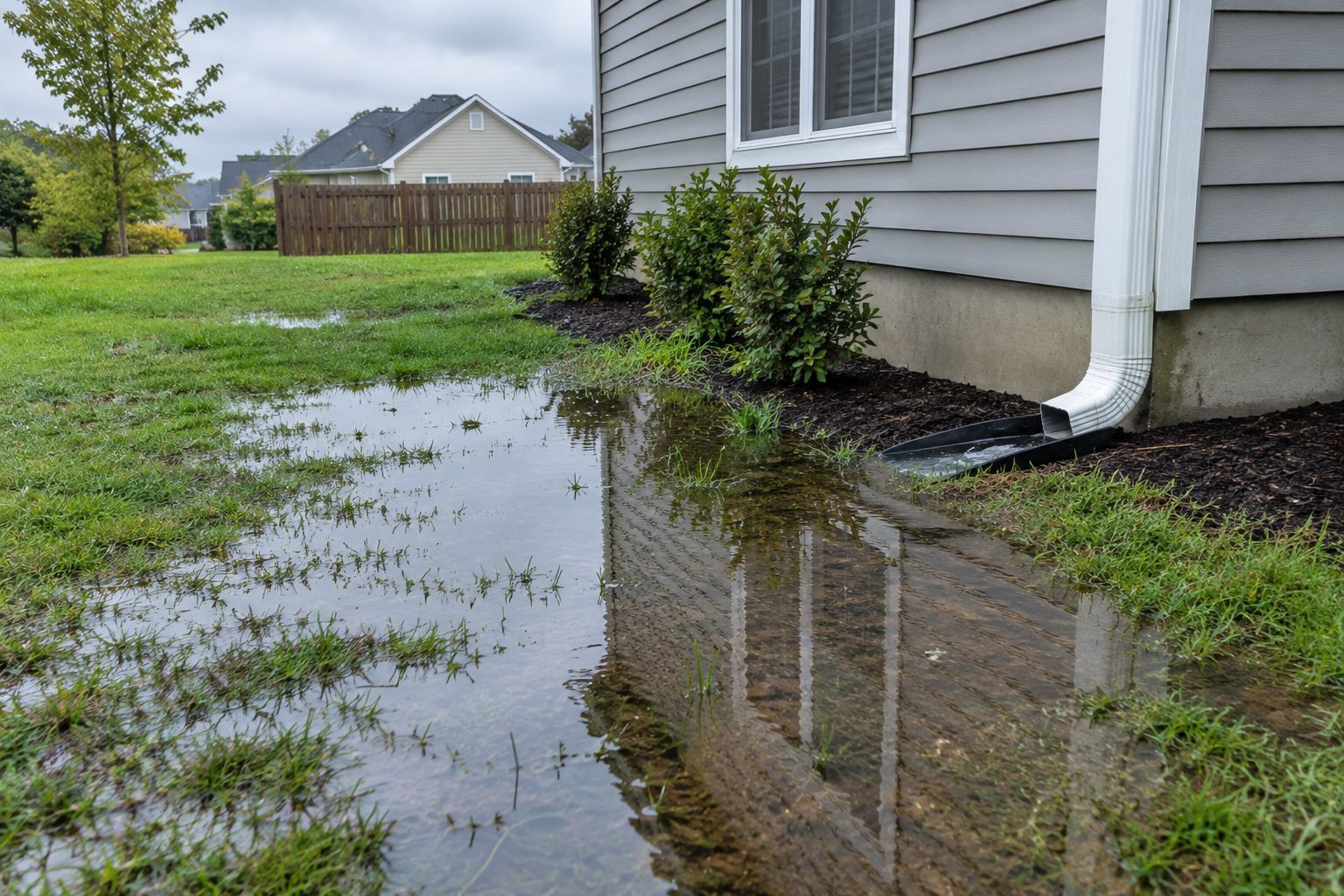
Stand in an Asheville backyard an hour after a summer downpour and you can read the grade with your own eyes. Water either sheets away from the house and disappears downhill, or it sits in dark patches against the foundation and soaks in. That difference is not luck. It is the slope of the dirt, set on purpose or left to chance.
For more than 15 years we have shaped lots across Buncombe County and the surrounding mountain towns, from Hendersonville to Canton to Weaverville. The same lesson shows up on almost every job. The ground decides where the water goes, and grading is how you make that decision instead of letting the last storm make it for you.
Slope Away From the House Is the Whole Game
Water follows gravity. That sounds obvious, and it is the single fact behind every grading decision on your property. If the ground tips toward your foundation, rain collects there. If it tips away, rain leaves. Our job is to make sure the ground near the structure tips the right way.
The first ten feet matter most
The zone right against the house is where damage begins, so it gets the steepest fall. Aim for about six inches of drop over that first ten feet, roughly half an inch per foot. That grade sheds a hard rain fast and still lets grass hold.
Farther out, ease the pitch
Past that first stretch you do not need six inches every ten feet. A steady two to three percent slope carries water toward a swale, a ditch, or the street without pooling. Drop below two percent and low spots hold puddles for days. That soft, spongy patch of lawn that never quite dries is almost always a grade problem.
Positive versus negative grade
Grade that falls away from the structure is positive, and it is what you want. Grade that falls toward it is negative, and it feeds water straight to the foundation. Plenty of drainage calls we get on older properties trace to negative grade that crept in as fill dirt settled and mulch beds built up.
Swales and Berms Move Water You Cannot Simply Slope Away
Sometimes you cannot pitch the whole lot away from the house, because there is a rise behind it or a neighbor's yard draining onto yours. That is where a swale earns its keep. A swale is a shallow, wide channel cut into the ground to gather runoff and steer it around what you protect.
Shape matters more than depth. A good swale runs a steady fall of two to four percent along its length. Less than two percent and water pools in the bottom. More than four percent and it moves fast enough to scour the channel and wash soil downstream. The sides stay gentle, no steeper than about three feet of width per foot of depth, so the banks hold grass and never cave.
A berm is the swale's partner. It is a low ridge of packed soil that blocks water from crossing a line you draw, often set along the uphill side of a swale. Pair the two across a hillside and a sheet of runoff that used to hit the back wall becomes a controlled stream sliding past the house. Rain that spreads thin and drifts slowly does little harm. The trouble starts when it gathers into a narrow rush fast enough to carry dirt, so good grading keeps runoff spread out and slow before it reaches a drain.
Drainage Systems That Pair With the Grade
Grading handles surface water. Some jobs need buried help too. A drain with no slope feeding it is a clogged trench waiting to happen.
A French drain is the workhorse. It is a gravel-filled trench with a perforated pipe that collects water below grade and carries it off. Buried a foot and a half or more and pitched at least one percent toward its outlet, it pulls down groundwater that surface grading alone cannot reach.
Catch basins and downspout lines round out the setup. A catch basin sits at a low point, swallows the water your grade delivers, and ties into solid pipe running to a safe discharge. Downspouts get extended past the foundation onto ground that already slopes away. Every piece leans on the grade.
Tip: Walk your property during the next heavy rain, not after it. You will see exactly where water sheets, where it stalls, and where it races. Those live observations tell us more about your grade in ten minutes than a dry-day walk tells in an hour, and they point straight to the spots that need reshaping.
What Poor Grading Quietly Does to a Property
Bad grade rarely announces itself. It works slowly, and by the time you notice, the fix is bigger than a little dirt work would have been.
Water sitting against a foundation is the classic problem. Saturated soil presses on foundation walls, finds hairline cracks, and works into crawl spaces and basements. Over seasons of freeze and thaw that pressure widens cracks and can shift a footing. The musty smell in a closed-up crawl space is often the first hint that the grade outside is feeding water in.
Erosion is the other slow thief. When runoff channels instead of spreading, it strips topsoil, undercuts walkways, and carves gullies across a yard. On a slope the loss speeds up, since moving water gains force as the pitch steepens.
Warning: Never solve a wet yard by piling soil or a raised bed against your siding to hide the low spot. That traps moisture against the wall, invites rot and pests, and can bridge water above the foundation's protection. The fix is to correct the fall of the ground, not to bury the symptom.
Why Mountain Slopes and Rocky Clay Change the Plan
Grading a flat lot and grading a hillside outside Waynesville are different jobs. Western North Carolina hands you three conditions at once, and each one shapes the plan.
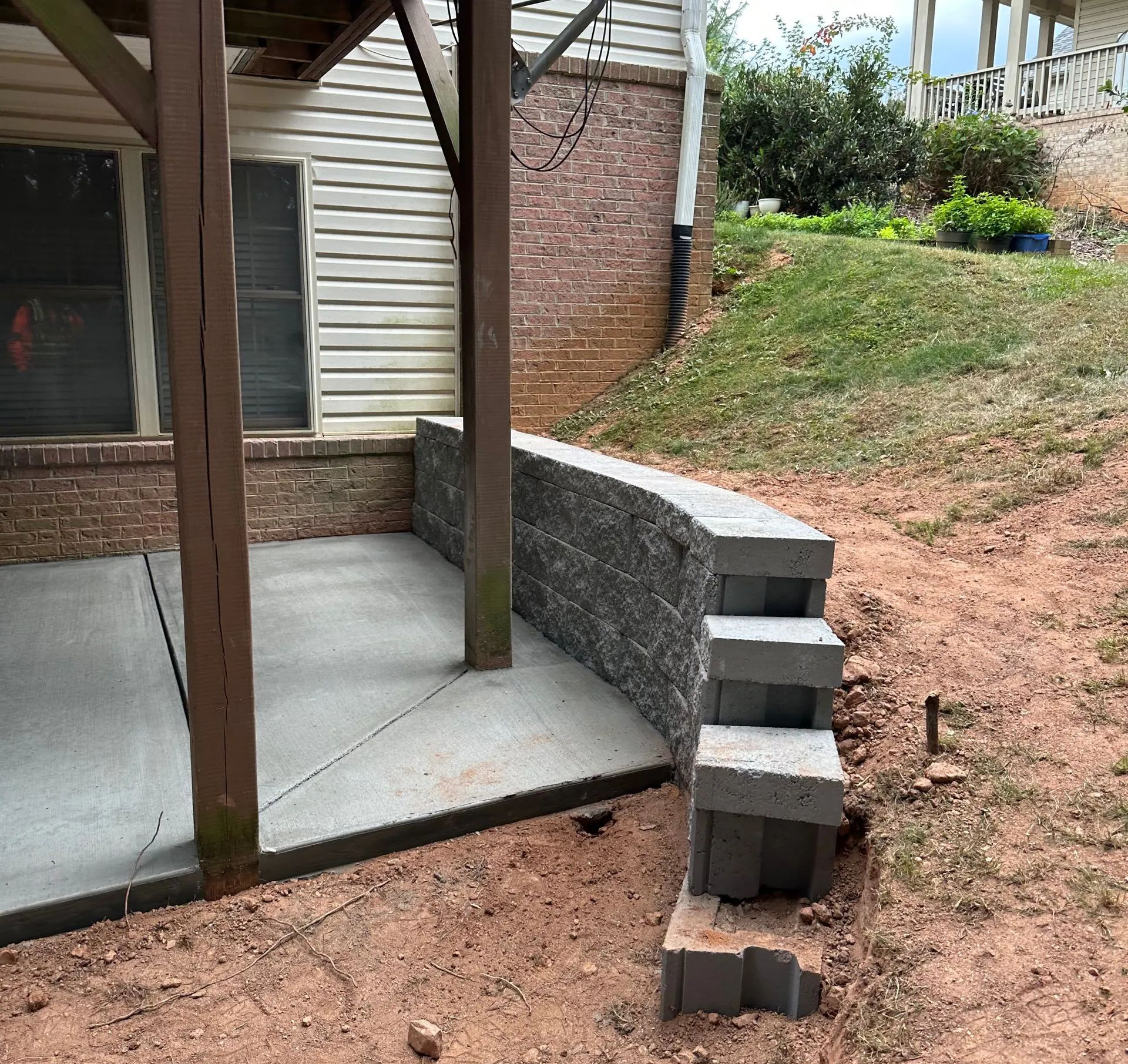
Steep terrain is the first. Many lots here already fall hard in one direction, which sounds helpful until that same pitch speeds runoff to erosion levels. On these grades we break one long slope into gentler steps and hold soil with reshaped contours, so water walks down instead of sprinting.
Then there is the soil. Much of our region sits on rocky red clay, and clay does not drink water the way sandy soil does. Bare clay sheds well over half the rain that lands on it as surface runoff, where a sandy loam soaks up far more. That means more water reaching your grade faster, so slopes and swales here have to move a bigger volume than the same lot would in looser ground. The rock mixed through the clay also makes cutting a clean fall real work.
Mountain rain finishes the picture. Storms here drop a lot of water in a short window, and remnants of tropical systems can dump inches in a day. A grade that handles a light drizzle gets overwhelmed by that kind of rain if it was never built for volume. We plan the fall, the swales, and the drains around the hard storms this region gets.
Frequently Asked Questions
How much slope do I really need away from my foundation?
Aim for six inches of drop across the first ten feet beside the house, near half an inch per foot. Past that, a two to three percent fall keeps water moving away steadily without pooling.
Can grading alone fix a wet basement or crawl space?
Often it helps enormously, since most intrusion starts with ground sloping toward the structure. Correcting that fall removes the source of pressure. When water rises from below too, a French drain completes the drainage fix.
What is the difference between a swale and a French drain?
A swale is a shaped surface channel moving water across the ground, using a gentle two to four percent fall. A French drain is a buried gravel trench with perforated pipe. Many properties use both.
Why does my yard stay soggy long after it stops raining?
Standing water days after a storm usually means the grade runs too flat or dips into a low spot with nowhere to drain. Heavy clay holds water at the surface. Reshaping the fall clears it.
Does grading help with erosion on a sloped lot?
Yes, and on a steep lot it ranks among the best tools. Spreading runoff into thin sheet flow and slowing it with swales and reshaped contours keeps water from gathering into channels that strip soil.
When should I have grading looked at?
Any time water pools near the house, gullies form after storms, or a crawl space smells damp, the grade deserves a closer look. Checking before a driveway, patio, or addition beats reworking the fall later.
Shaping Ground That Sheds Water The Right Way
Grading is decided by what the ground does during a hard rain, not by how a yard looks on a dry afternoon. We read where water sheets, where it stalls, and where it races, then shape the fall so runoff leaves the foundation and reaches a safe outlet. With 15+ years working on mountain lots and rocky clay, Arguetas Grading and Concrete LLC knows how much volume a slope has to carry here.
Property owners around Asheville, North Carolina call us when a crawl space smells damp, when gullies open after storms, or when a low spot never quite dries. We walk the land, explain what the grade is doing in plain terms, and lay out the swales, berms, or drains the site actually needs. Reach out to us before the next heavy storm decides for you.