Standing Water After Every Storm? What It's Telling You About Your Property's Drainage
Quick Answer: Poor drainage shows up as standing water that lingers a day or more after rain, soggy or mushy turf, erosion channels cutting across your yard, water sitting against your foundation, and a musty smell in a crawl space or basement. On its own, one soft spot might mean nothing. Several of these signs together, especially on a sloped Western North Carolina lot with clay soil, usually point to ground that needs to be reshaped so water moves the way it should instead of collecting where it shouldn't.
Every property sheds rain somewhere. The question is whether it sheds where you want it to. Walk your yard the day after a heavy storm and the ground will tell you the truth about its own drainage far better than a dry afternoon ever could. Puddles that refuse to soak in, grass that squishes underfoot weeks after the rain stopped, bare dirt where turf used to grow, these are not random inconveniences. They are the ground signaling that water has nowhere good to go.
We have spent more than 15 years reading yards across Buncombe County and the surrounding mountain towns, from Hendersonville to Waynesville to Canton. The pattern repeats on lot after lot. Drainage problems rarely appear overnight. They build slowly, one storm at a time, until a homeowner finally notices the low spot that never used to hold water or the crawl space that smells different than it used to. Catching the early signs saves you from the bigger repairs that show up once water has had years to work against your property.
The Signs You Can See From Your Back Door
Standing water is the most obvious sign, and it is worth paying attention to how long it sticks around. A puddle that disappears within an hour or two of a hard rain is normal. Water that is still sitting in the same spot the next morning, or worse, two or three days later, means the soil underneath is not accepting it and the surface has nowhere to send it either.
Soggy, spongy turf is the quieter cousin of standing water. You might not see a puddle, but every step feels like walking on a wet sponge, and your mower leaves ruts weeks after the ground should have firmed back up. This usually shows up in low spots or areas where the yard flattens out instead of maintaining a steady fall toward a swale, ditch, or street.
Grass that thins or dies in the same spot year after year, while the rest of the lawn stays healthy, often traces back to roots sitting in saturated soil more often than they should. Plants generally tolerate an occasional heavy soaking. What kills them is soil that never fully drains between storms, which starves roots of oxygen even while they sit in plenty of water.
Erosion Marks Are Drainage Problems in Disguise
Erosion rarely gets treated as a drainage sign, but it almost always is one. When water spreads out and moves slowly across a well-graded lawn, it does little damage. When the ground funnels that same water into a narrow path, the water speeds up and starts carrying soil with it.
Small channels or rills cutting across a slope after storms are an early warning. Exposed tree roots that used to be covered, gravel or mulch that keeps washing off a bed and piling up at the bottom of a hill, and bare patches where topsoil has visibly thinned all point to runoff that is moving faster and more concentrated than the land was ever shaped to handle. On a sloped property, this tends to accelerate, since water picks up force as the pitch steepens, and a small rill left alone one season can become a real gully the next.
Sediment loss is not just a cosmetic problem either. Soil that erodes off a poorly draining property has to land somewhere, and North Carolina's own environmental data identifies sediment as the state's leading water pollutant, much of it originating from yards, construction sites, and slopes where runoff was never controlled. That context matters here because Western North Carolina's terrain gives runoff plenty of slope to gather speed on before it reaches a stream.
What's Happening Near Your Foundation and Crawl Space
Some of the most important drainage signs are the ones you have to go looking for, because they show up close to the house rather than out in the yard.
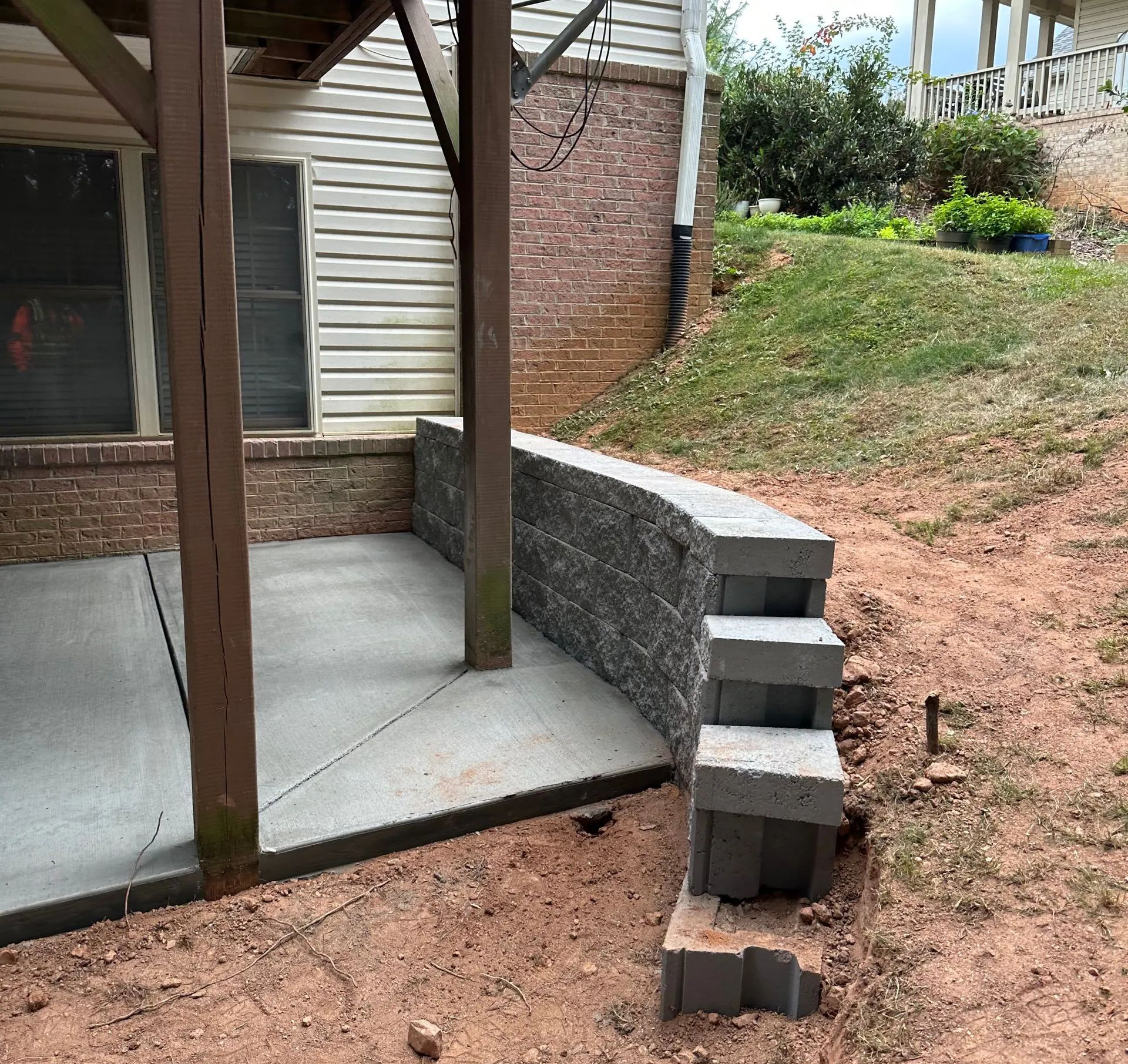
Water that pools or visibly sheets toward your foundation instead of away from it is a sign worth acting on quickly. Over repeated storms, saturated soil pressing against a foundation wall can work its way into hairline gaps and find its way inside. A musty, damp odor in a crawl space or basement, especially one that gets stronger after rain, often means moisture is finding a path in from outside rather than starting inside the structure. Visible dampness on interior foundation walls, peeling paint near the base of the house, or a dehumidifier that runs constantly in a crawl space are all downstream effects of the same upstream problem: grade that is not carrying water away from the structure.
Tip: You can get a rough read on your own soil without any tools beyond a shovel. Dig a hole about a foot deep, fill it with water, let it drain, then fill it again and time how long the second fill takes to empty. Extension research on clay-heavy soils treats anything longer than about twelve hours as a sign that the ground is draining too slowly, which lines up closely with the soil conditions common across Western North Carolina's rocky red clay.
Why This Shows Up So Often on Western North Carolina Properties
Three regional factors stack on top of each other here, and each one makes drainage signs more likely to appear and more important to catch early.
A large share of properties across Asheville, Hendersonville, and the surrounding mountain communities sit on ground that already falls in one direction before anyone touches it. That natural pitch can work in your favor when it is shaped correctly, moving water off the lot in a controlled sheet. Left unshaped, the same slope speeds runoff into the kind of concentrated flow that erodes soil and overwhelms low spots at the bottom of the hill.
Then there is the soil, which may matter even more than the slope. Much of the region sits on dense, rocky clay that behaves very differently from a sandy or loamy soil. Clay particles pack tightly, leaving little room for water to move through, so rain that a looser soil would absorb tends to sit on top of clay or run off across its surface instead. That is exactly why the percolation test mentioned above is such a useful check here specifically, since clay soils are the ones most likely to fail it.
Rain finishes the picture. Mountain storms in this part of North Carolina do not always arrive as gentle, steady rain. They often come as intense bursts, sometimes carrying the remnants of tropical systems that dump several inches in a matter of hours. Federal engineering guidance on drainage grading notes that even well designed slopes need consistent, adequate fall to keep water moving rather than pooling, and that steeper grades typically call for additional erosion control measures as the pitch increases. A grade built to handle a light, steady rain can be quickly overwhelmed by the kind of concentrated downpour this region sees several times a year.
Before You Try to Fix It Yourself
Once you spot these signs, the instinct is often to patch the symptom rather than the cause. That instinct usually makes things worse, not better.
Warning: Avoid piling extra soil, mulch, or a raised garden bed against your siding to hide a wet spot near the house. That approach traps moisture directly against the wall, invites wood rot and pests, and can bring water above the level the foundation was built to handle. The fix is correcting the fall of the ground itself, not burying the problem under more dirt.
Planting large trees or shrubs directly in a persistently wet low spot is another common workaround that tends to backfire, since the plants that tolerate standing water best often have aggressive root systems that can interfere with nearby structures, walkways, or utility lines over time. Filling in a soggy spot with loose fill dirt without addressing where the water was coming from usually just relocates the puddle a few feet away rather than solving it.
What's Happening Near Your Foundation and Crawl Space
Some of the most important drainage signs are the ones you have to go looking for, because they show up close to the house rather than out in the yard.
Water that pools or visibly sheets toward your foundation instead of away from it is a sign worth acting on quickly. Over repeated storms, saturated soil pressing against a foundation wall can work its way into hairline gaps and find its way inside. A musty, damp odor in a crawl space or basement, especially one that gets stronger after rain, often means moisture is finding a path in from outside rather than starting inside the structure. Visible dampness on interior foundation walls, peeling paint near the base of the house, or a dehumidifier that runs constantly in a crawl space are all downstream effects of the same upstream problem: grade that is not carrying water away from the structure.
Tip: You can get a rough read on your own soil without any tools beyond a shovel. Dig a hole about a foot deep, fill it with water, let it drain, then fill it again and time how long the second fill takes to empty. Extension research on clay-heavy soils treats anything longer than about twelve hours as a sign that the ground is draining too slowly, which lines up closely with the soil conditions common across Western North Carolina's rocky red clay.
What Comes Next Once You've Spotted the Signs
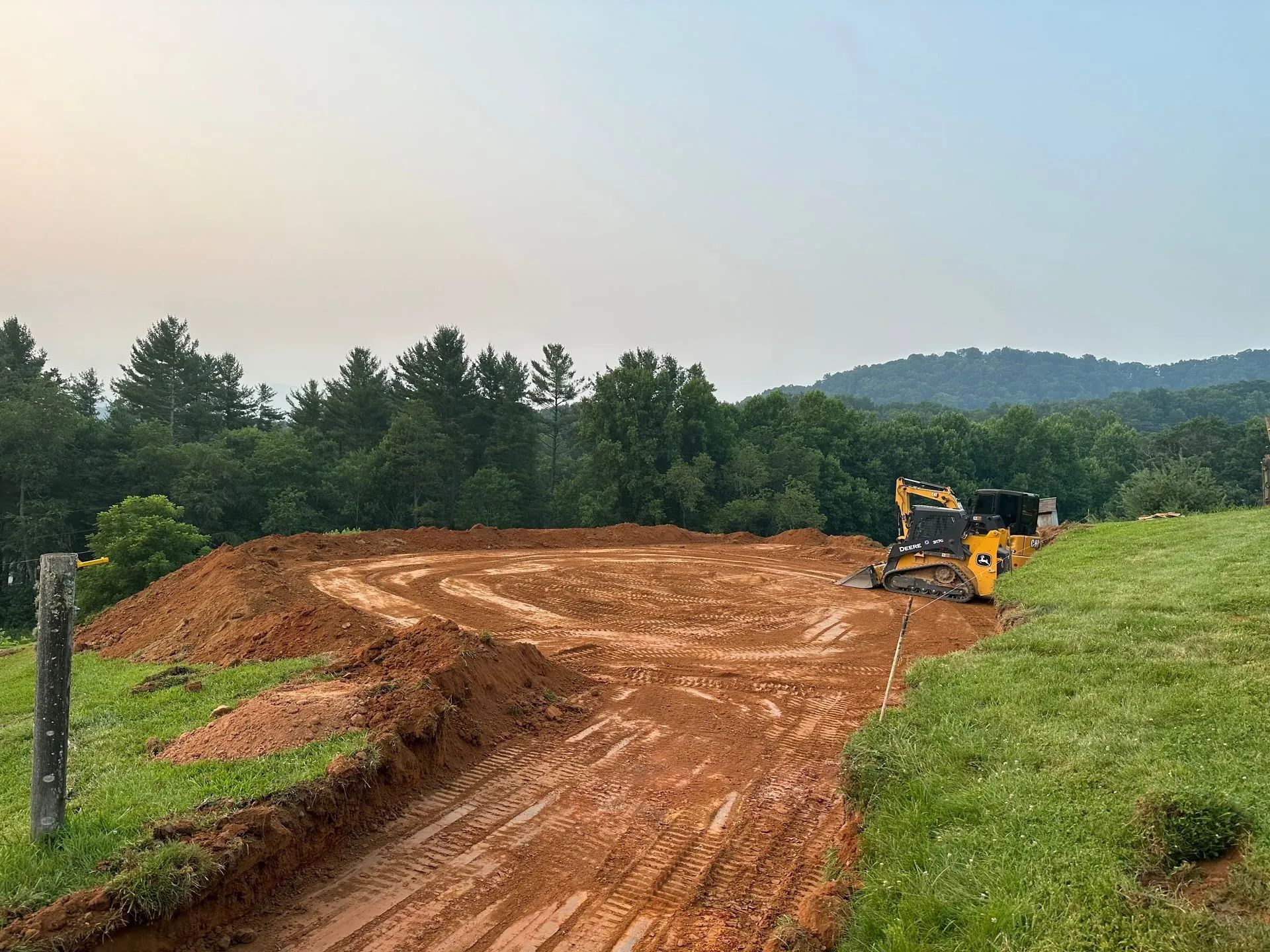
Recognizing these signs early is the valuable part. A single soggy corner of the yard is often a simple fix, a reshaped swale or a small correction to the slope near a downspout. A pattern of standing water, erosion channels, and foundation moisture together usually points to a broader regrading need, one that looks at how the whole property sheds water rather than treating each symptom separately.
The land itself holds the answer. Reading how water actually moves across your property during and after a storm, rather than guessing from a dry-day walk, is the starting point for figuring out whether you are dealing with one isolated low spot or a grade that needs to be reworked from the ground up. Rocky clay soil, mountain slopes, and heavy regional rainfall all make this kind of assessment more valuable here than it might be on a flatter, sandier lot elsewhere.
Frequently Asked Questions
How long is too long for water to sit in my yard after rain?
Water remaining for a full day after normal rainfall can indicate poor drainage. Persistent puddles or muddy areas often mean compacted soil, clay, or improper grading is preventing water from moving away efficiently.
Can poor drainage really affect my foundation if I don't see water right against the house?
Yes. Saturated soil near a foundation can gradually direct moisture toward the structure even without visible puddles. Musty crawl spaces, damp foundation walls, or persistent humidity may indicate an underlying exterior drainage problem.
Why does my property seem to have worse drainage than my neighbor's?
Neighboring properties can drain differently because of subtle variations in slope, soil composition, construction fill, landscaping, and runoff direction. Even small grading differences can determine whether rainfall drains efficiently or collects in persistent low areas.
Does clay soil always mean I'll have drainage problems?
Not necessarily, but clay soil naturally absorbs water more slowly than sandy or loamy soil. Proper grading becomes especially important because surface water needs a reliable path away when the ground cannot absorb rainfall quickly.
When is it worth having someone look at the grading instead of just watching and waiting?
Consider an evaluation when standing water, soggy turf, recurring erosion, or foundation moisture appears repeatedly after storms. Multiple drainage warning signs often indicate a grading problem that may become more difficult to correct over time.
Better Drainage Starts With Reading the Land
Standing water, soggy turf, erosion channels, and lingering moisture near a foundation are all ways a property reveals how water is moving across it. These problems rarely correct themselves, especially where mountain slopes, dense clay soil, and heavy rainfall influence drainage. At Arguetas Grading and Concrete LLC, our 15+ years of experience serving Asheville, NC, have shown how identifying these patterns early can help prevent gradual soil loss, persistent saturation, and unnecessary stress around foundations and landscaped areas.
Good drainage ultimately depends on giving rainwater a controlled path across and away from the areas that need protection. Sometimes that requires correcting a single low spot, while other properties benefit from broader grading that works with the natural slope of the land. Paying attention to what happens during and after storms provides the clearest picture. When the ground is shaped appropriately, water can move naturally instead of collecting, cutting channels, or repeatedly creating wet conditions around the property.