How Proper Grading Prepares Your Land For A Long Lasting Driveway
Quick Answer: Grading for a driveway means reshaping native soil into a stable, properly sloped subgrade before gravel, asphalt, or concrete goes down. Most driveway surfaces are designed to fall between about 1 and 2 percent, roughly a quarter inch of drop per foot, enough to keep water moving without feeling steep underfoot. Contractors typically remove unsuitable topsoil along the driveway path, then build up a compacted aggregate base commonly 4 to 6 inches thick to carry repeated vehicle weight. On Western North Carolina properties, rocky clay soil and sloped lots often add steps such as deeper excavation, benching, or added fill before that base ever goes down.
We have spent more than 15 years shaping ground across Buncombe County and the surrounding mountain towns, and a driveway is one of the few parts of a property that gets tested every single day. A patio can sit quietly for years without much stress on it. A driveway carries the weight of a loaded truck or an SUV dozens of times a week, in freezing mornings and soaked afternoons alike, on ground that in this part of North Carolina is rarely flat to begin with.
What holds that surface together over time has almost nothing to do with the wear layer on top and almost everything to do with what happens underneath it before that layer ever gets poured or spread. Grading is where that groundwork gets set. It determines whether water moves off the surface the way it should, whether the soil beneath the driveway can bear the weight it will carry for the next twenty or thirty years, and whether the whole path holds a stable position on a lot that may drop several feet from the street to the garage.
Clearing the Path Before Any Shaping Begins
Before a driveway's slope or base can be designed, the ground along its path has to be stripped down to something worth building on.
Removing Organic Material
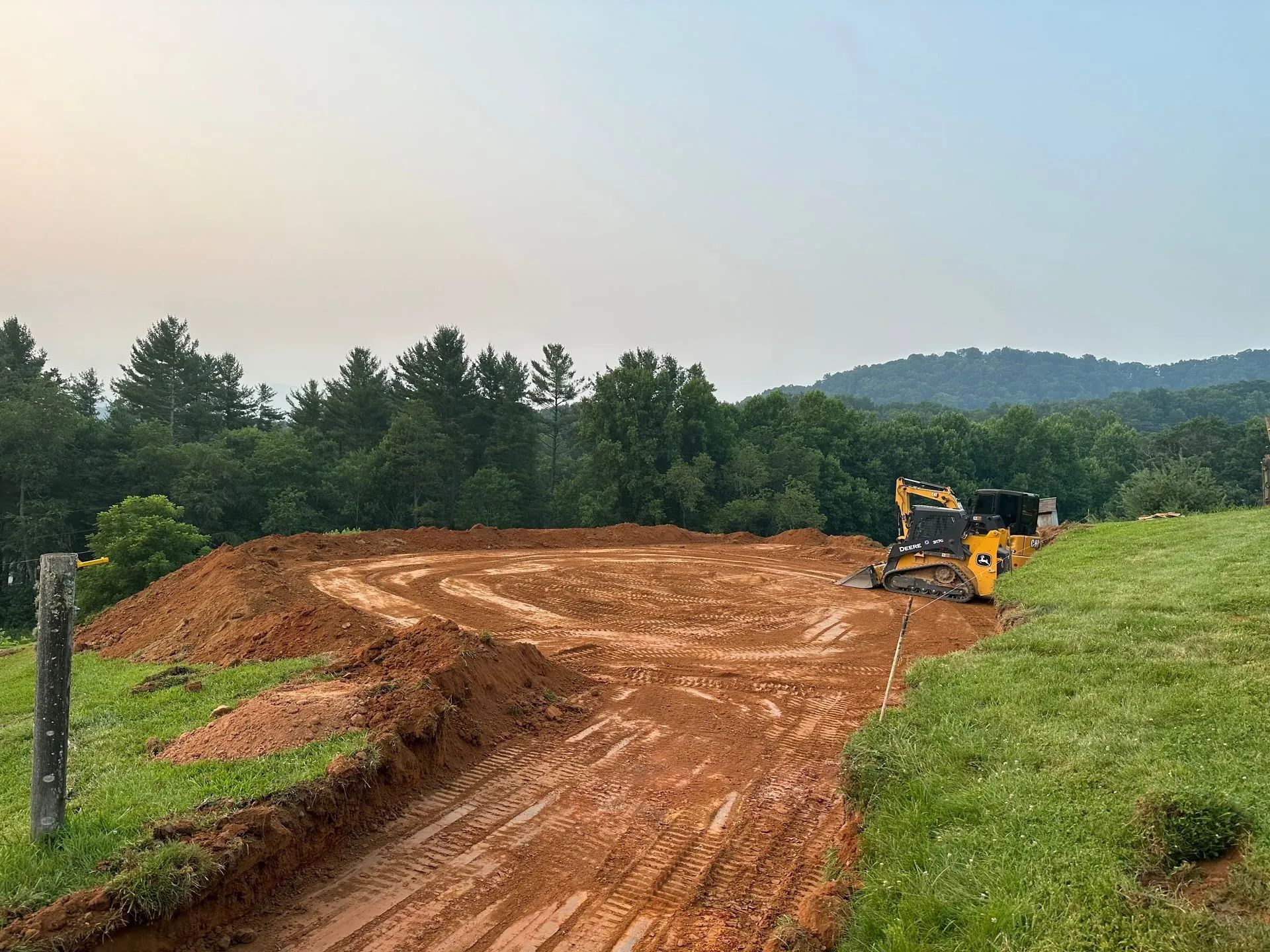
Topsoil, roots, grass, and buried organic debris eventually compress or decompose beneath a driveway, causing uneven settlement. Removing these materials exposes stable mineral soil that provides a more predictable foundation for repeated vehicle loads.
Locating Soft Or Unstable Spots
Soft fill, buried debris, or saturated clay may lack the strength needed beneath a driveway. These weak areas should be identified, excavated, and replaced with properly compacted fill before grading continues to prevent future settlement.
Setting Rough Elevations
After clearing the driveway path, crews cut high areas and add fill to low areas until the ground approaches planned elevations. This rough grading establishes the basic framework for the driveway's final slope.
Designing the Slope Before Choosing a Surface
The slope of a driveway gets decided before anyone picks gravel, asphalt, or concrete, because the surface material has to be laid on top of a grade that already works.
A Modest Fall Does The Real Work
A driveway slope of roughly 1 to 2 percent, about a quarter inch per foot, generally keeps water moving without creating an uncomfortable grade for normal walking or driving.
Direction Matters As Much As The Number
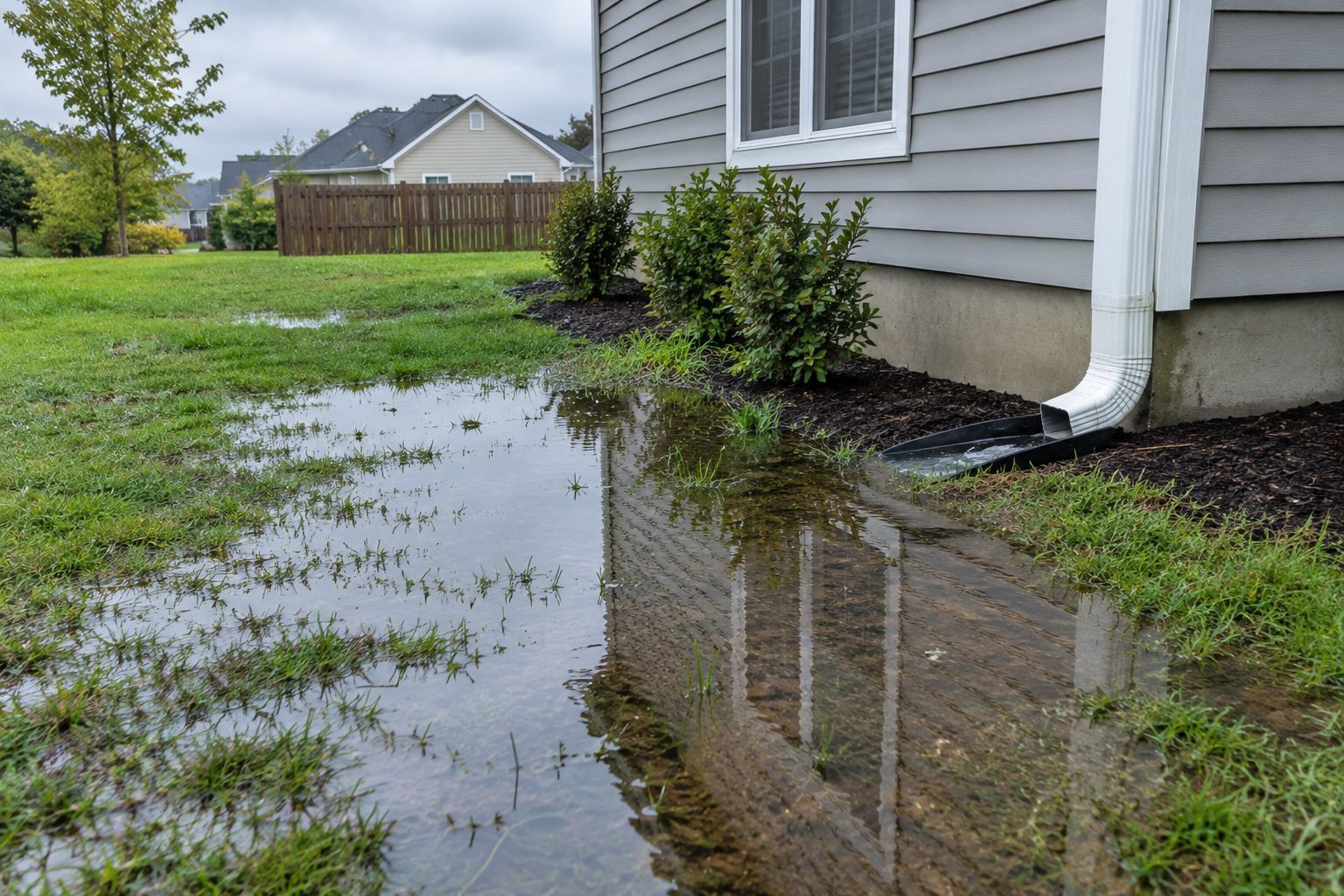
A driveway should slope away from garages and foundation walls so rainfall moves toward a street, ditch, or drainage area. Even a gentle slope can cause problems when directed toward structures.
Steeper Sections Get Handled Differently
Sloped properties may require different grades along the driveway rather than one continuous slope. Flatter transitions near the street and garage can reduce scraping, traction issues, and abrupt elevation changes.
Crown And Cross Slope Move Water Sideways
A slight center crown or cross slope helps move water toward driveway edges instead of allowing it to pool. This secondary shaping works with the primary slope and is established during grading.
Tip: If you already have a gravel or dirt driveway and want a read on how it drains before deciding what to build on top of it, watch it during and right after a real rainstorm instead of a dry afternoon. Note exactly where water sits, how long it lingers, and whether it moves toward the garage or away from it before assuming the existing grade is fine as is.
Building the Base That Carries the Weight
A driveway's surface only performs as well as what sits underneath it, and that base gets built during grading, not afterward.
Compacted Subgrade First
Once rough grading is complete, the exposed soil gets compacted to reduce future settlement. Loose native soil can compress under repeated vehicle loads, so proper compaction creates a stronger foundation for everything above.
Aggregate Base Thickness
A compacted layer of crushed stone or gravel typically forms the driveway base, often measuring 4 to 6 inches for residential applications. It spreads vehicle loads while providing space for water movement.
Compacting In Layers, Not All At Once
Base material should be placed and compacted in thin lifts rather than one thick layer. Layered compaction helps achieve consistent density throughout the base, improving bearing strength and drainage performance beneath the driveway.
How Rocky, Clay Heavy Ground Changes the Plan
Grading a driveway in Asheville, Hendersonville, Waynesville, or the surrounding mountain communities rarely looks like grading one on flat, sandy ground somewhere else, and two regional realities explain most of the difference.
Clay That Resists Water And Resists Digging
Much of Western North Carolina has dense, rocky clay that drains slowly and resists digging. Its tight structure can leave water near the surface while increasing grading time and compaction requirements during driveway preparation.
Buried Rock Changes The Excavation
Buried rock and ledge rock can complicate driveway excavation, especially when they sit near the planned grade. Crews may need to break through or work around these areas, changing base depth and shaping methods.
Slope Itself Adds A Layer Of Planning
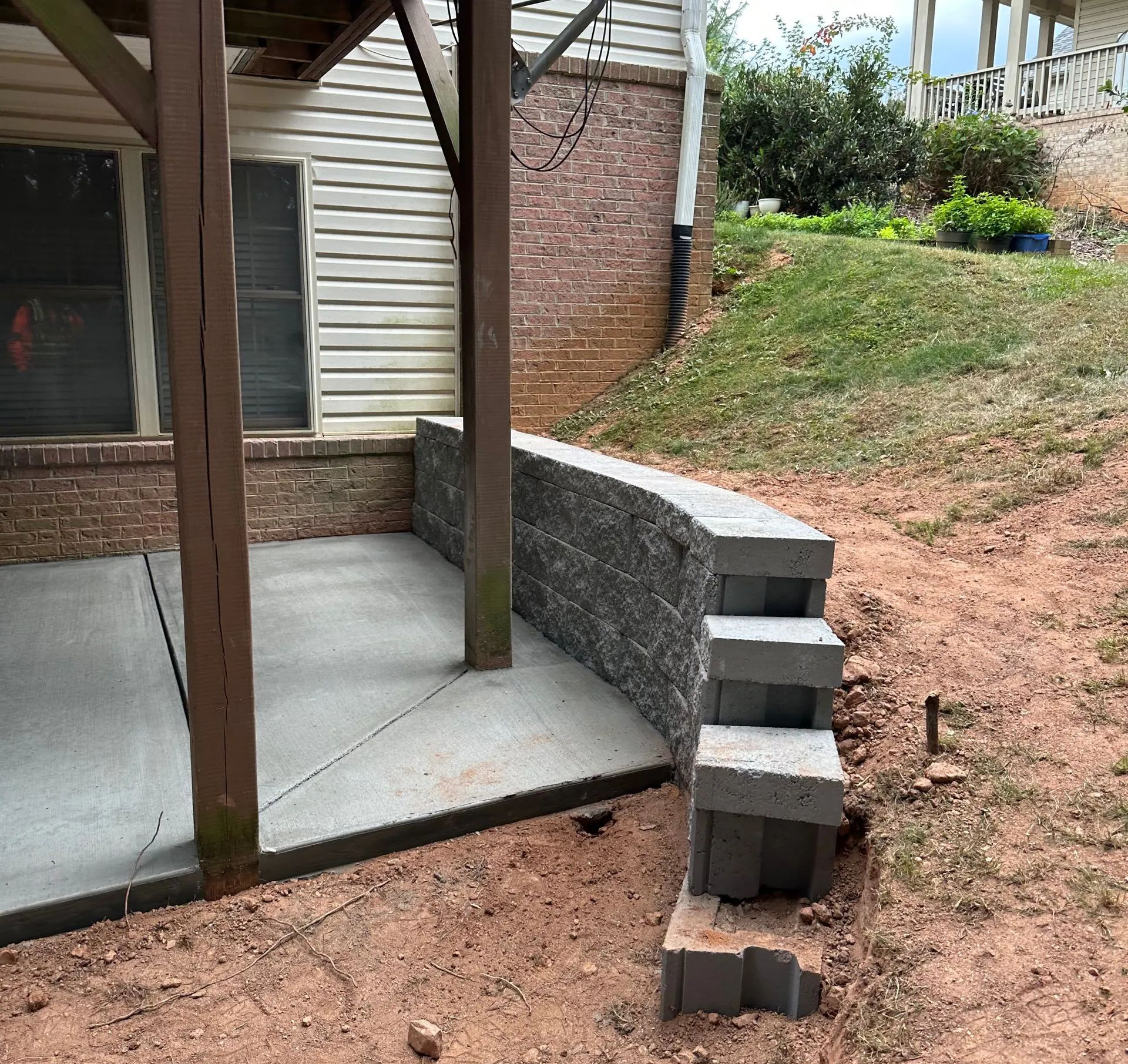
A hillside driveway requires planning for both cut and fill sides, since reshaped ground handles rainfall differently. Uphill drainage swales or retaining structures may be needed to manage runoff safely across steep mountain properties.
Directing Water Away From the Finished Surface
A driveway that is graded correctly does more than sit level. It manages every storm that hits it for as long as it exists.
Water Needs A Destination, Not Just A Direction
Grading a driveway away from the garage is only half the solution if runoff has nowhere to go. Swales, ditches, or drainage connections provide a clear path for water leaving the pavement.
The Garage Transition Takes Special Attention
The final few feet where a driveway meets the garage or entry point require careful grading. Even slight reverse pitch can direct water toward the structure, making repeated checks essential before the base is finalized.
Warning: Avoid adding loose fill dirt, gravel, or extra base material on top of an existing driveway to try to fix a low spot or a puddle without addressing the grade underneath it first. Piling material on the surface without correcting the slope or base below it usually shifts the water problem a few feet over rather than solving it, and it can leave the new material sitting unstable on top of a surface it was never designed to bond with.
What's Happening Near Your Foundation and Crawl Space
Some of the most important drainage signs are the ones you have to go looking for, because they show up close to the house rather than out in the yard.
Water that pools or visibly sheets toward your foundation instead of away from it is a sign worth acting on quickly. Over repeated storms, saturated soil pressing against a foundation wall can work its way into hairline gaps and find its way inside. A musty, damp odor in a crawl space or basement, especially one that gets stronger after rain, often means moisture is finding a path in from outside rather than starting inside the structure. Visible dampness on interior foundation walls, peeling paint near the base of the house, or a dehumidifier that runs constantly in a crawl space are all downstream effects of the same upstream problem: grade that is not carrying water away from the structure.
Tip: You can get a rough read on your own soil without any tools beyond a shovel. Dig a hole about a foot deep, fill it with water, let it drain, then fill it again and time how long the second fill takes to empty. Extension research on clay-heavy soils treats anything longer than about twelve hours as a sign that the ground is draining too slowly, which lines up closely with the soil conditions common across Western North Carolina's rocky red clay.
What Shows Up Later When This Step Gets Rushed
Grading problems on a driveway rarely announce themselves on the day the surface goes down. They tend to show up months or years later, once repeated weather and repeated weight have had time to work on ground that was never properly prepared.
Settling and dipping in one specific spot almost always traces back to soil that was not cleared of organic material or compacted properly before the base went in. Cracking that follows a pattern rather than appearing randomly often points to a base that was too thin or too loosely packed to carry the weight moving over it. Standing water at the bottom of a slope or against a garage door is frequently the direct result of a grade that was cut a percent or two off from where it needed to be, a difference barely visible to the eye but very visible after the next hard rain.
Frequently Asked Questions
How much slope does a driveway actually need for proper drainage?
Most residential driveways are designed with a surface slope of roughly 1 to 2 percent, close to a quarter inch per foot. That's generally enough to keep water moving without feeling steep to drive.
Does a gravel driveway need the same grading as a concrete or asphalt one?
Yes, in most respects. Gravel still needs a compacted subgrade, a properly shaped slope, and a stable base layer. Without that prep, gravel shifts, ruts, and washes out faster.
What happens if a driveway ends up graded too flat or too steep?
Too flat and water sits in low spots, softening the base and speeding up cracking. Too steep and vehicles can scrape or lose traction, especially in wet or icy conditions.
Can an existing driveway be regraded without tearing it out completely?
Sometimes. Minor slope corrections near the surface can occasionally be addressed without full removal, but a base that was never compacted properly usually needs to come out entirely.
How does the rocky clay soil common in this region affect driveway grading?
Rocky clay drains more slowly than sandy soil and is harder to cut through cleanly, extending how long grading takes. Buried rock sometimes changes excavation depth or slope transitions.
Why does a driveway need a different base than the surrounding yard?
A driveway carries repeated vehicle weight that lawn areas never see, so it needs a compacted aggregate base rather than plain topsoil. That base spreads weight and lets water drain through.
Ground That Holds A Driveway Up For Decades
A driveway rarely fails because of what gets poured or spread on top of it. It holds up, or it doesn't, based on decisions made underneath that surface before any of it was visible, how the soil was cleared, how the slope was set, how the base was compacted, and where water was told to go once it landed. On flatter, drier ground those decisions matter plenty. On Western North Carolina's rocky clay and real elevation change, they matter even more.
Arguetas Grading and Concrete LLC
has spent 15+ years evaluating slope, soil, and drainage across properties in Asheville, NC, learning exactly where buried rock and dense clay tend to complicate a plan that would be simple somewhere flatter. That experience is what separates a driveway that quietly does its job for thirty years from one that needs correcting within the first five. Getting the ground right before anything gets poured is still the whole difference.